The Chattanooga Campaign was not only a large and costly battle that resulted in the routing of a Confederate army, it also stopped Confederate momentum in the Western Theatre following Chickamauga. The capture of Chattanooga by the Union would open the 'Gateway to the Lower South' which the Union would exploit in the following years.
At a Glance
698,000
Total Deaths
476,000
Total Injuries
1,505 days
Duration
Apr. 1861 - May 1865
Date(s)
Wars
Type of Event
Eastern United States
Location
Facts
Taking place nearly 100 years after the US Revolutionary War, the Civil War leveraged many emerging technologies on the battlefield, and to tremendous effect. The telegraph granted faster communication between forces; railroads enabled quicker transportation of troops, equipment, and supplies; and equipment such as mass-produced rifles and ironclad warships greatly increased combat effectiveness. However, medical science had advanced less quickly, and soldiers often endured both counterproductive medical care and highly unsanitary living conditions. As a result, casualties from disease, infection, and gangrene significantly outnumbered battlefield casualties and the Civil War became the deadliest in US history.
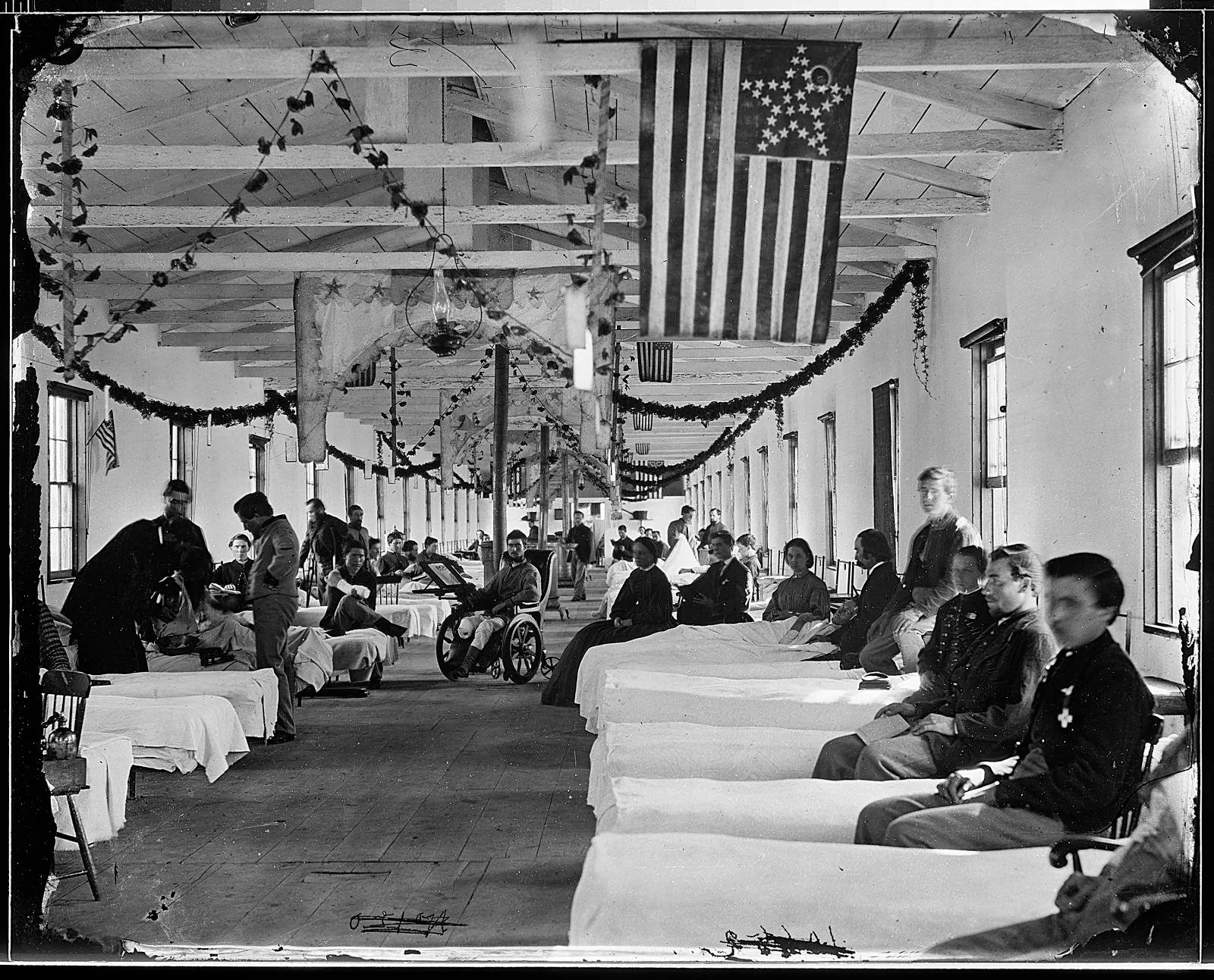
Convalescing Union soldiers, Carver Hospital, Washington D.C, date unknown
Union Losses:
- 110,100 KIA
- 224,580 Disease
- 275,174 Wounded
Confederate Losses:
- 94,000 KIA
- 164,000 Disease
- 194,026 Wounded
500 combined were executed, of which 256 were Union.
Prisoner of War Deaths
- Union: 30,156 (~15% of those incarcerated in Confederate Prisons)
- Confederate: 25,531 (~12% of those incarcerated in Federal Prisons)
- 13% mortality rate in prison overall
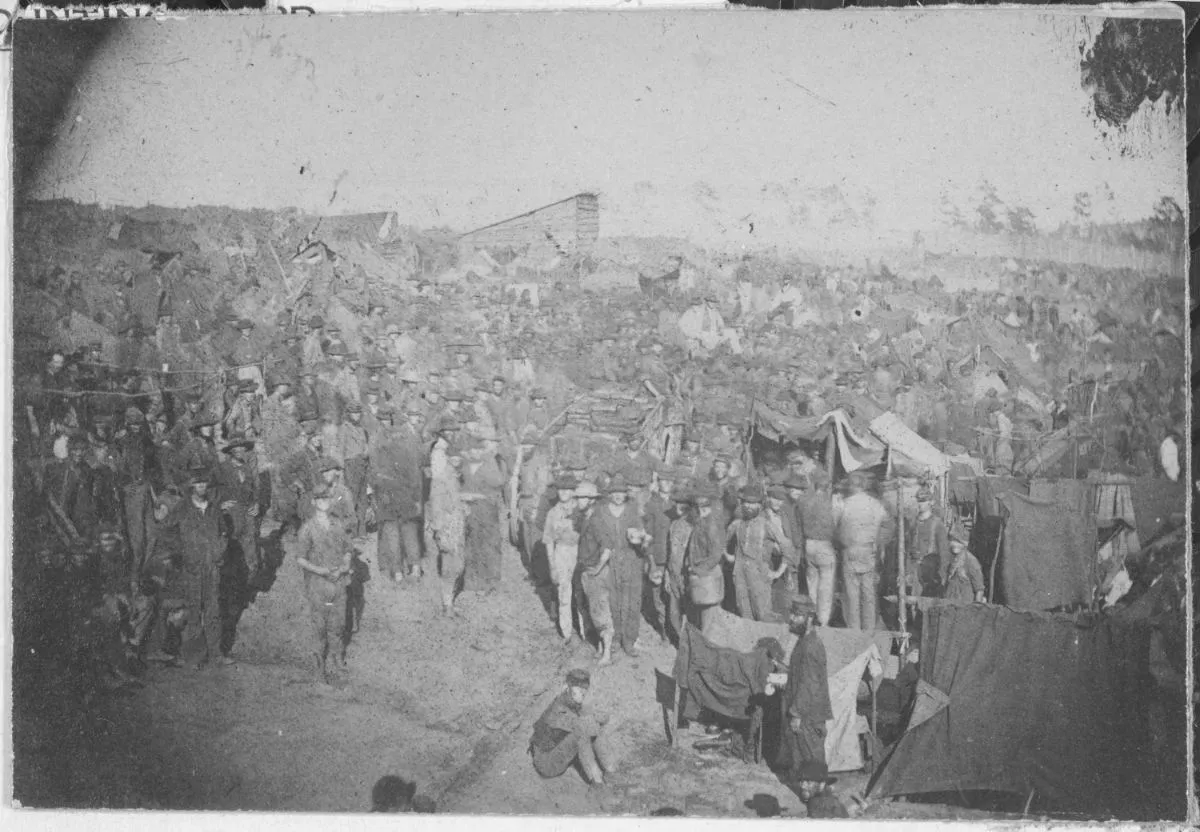
Union prisoners recieving rations at the infamous Andersonville Prison, August 17th 1864
Union vs Confederate Total Losses:
- 350,000 Confederate
- 500,000 Union
Barcélo Regional Death Breakdown
- 229,803 “Old North” Deaths
- 38,069 “Border States” Deaths
- 192,160 “Old South” Deaths
- 36,000 “Black Union” Deaths
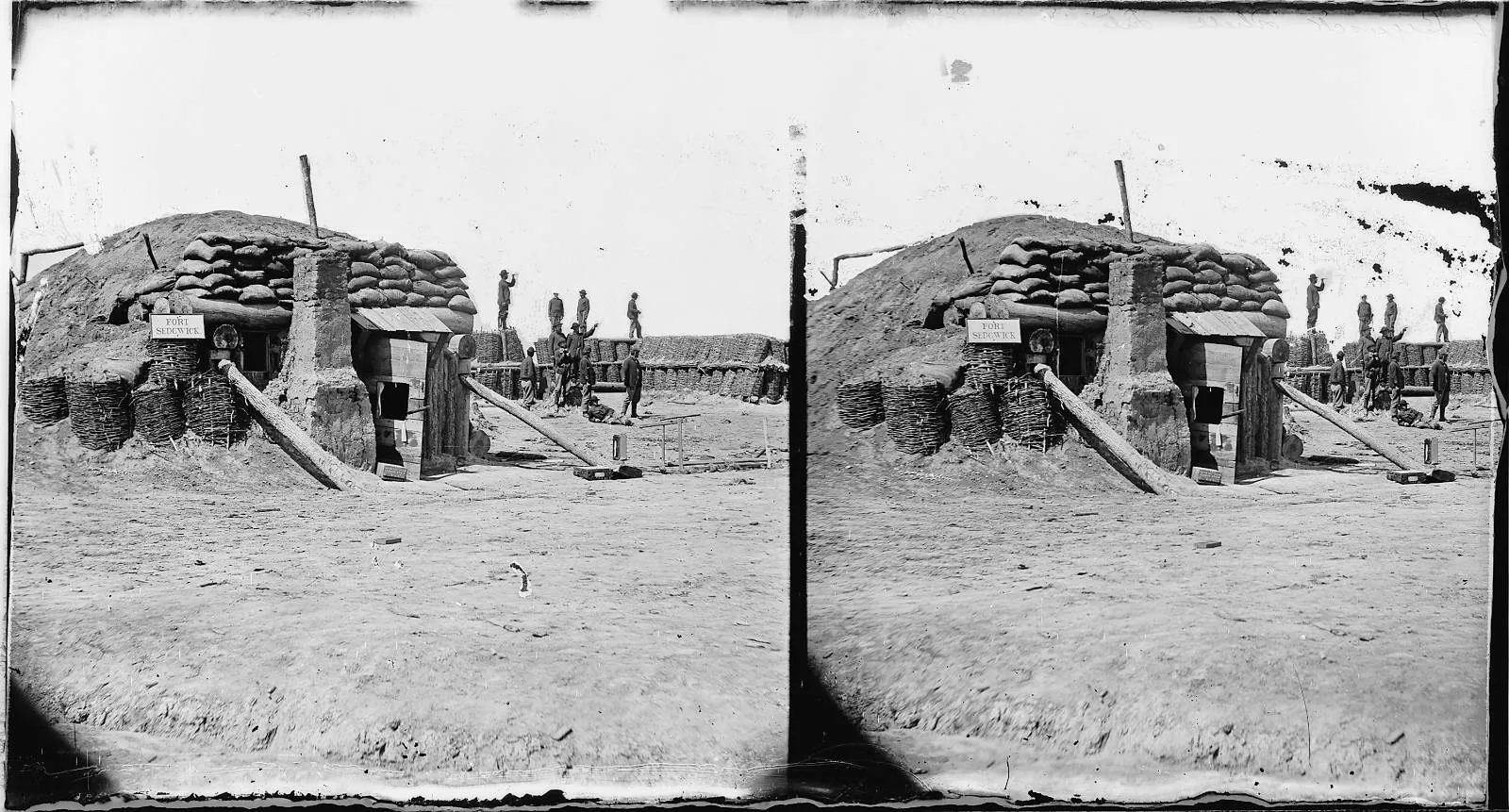
Early bunker, called a 'bomb proof hut', Union Fort Sedgwick at Petersburg, 1864/5
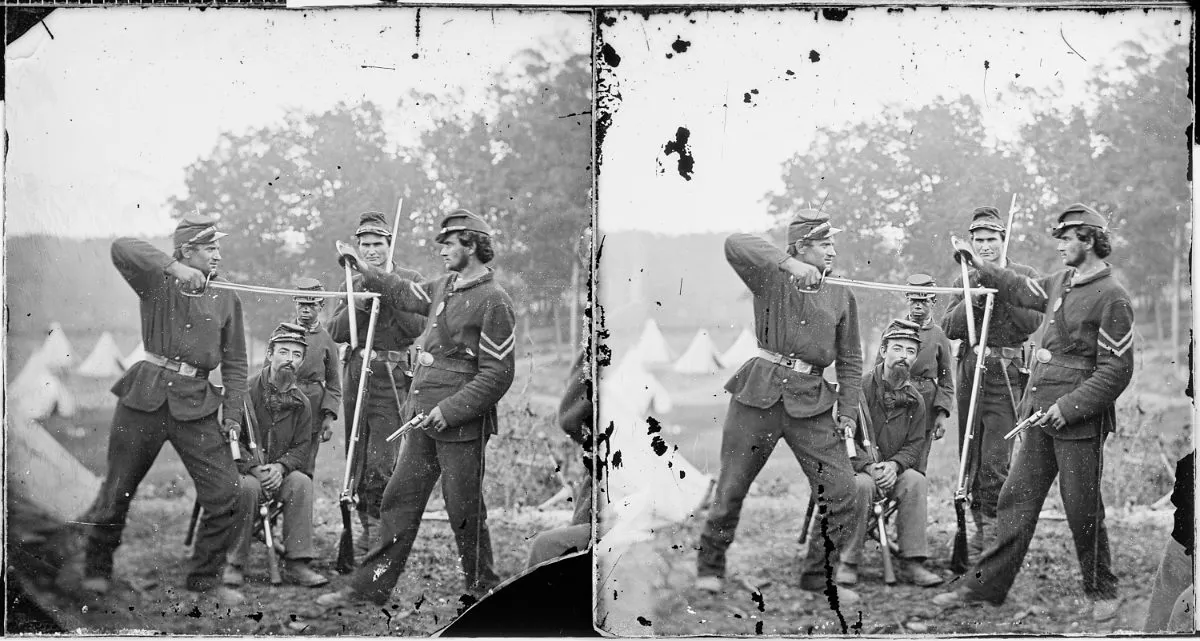
Group of Union infantry mock swordfighting, data unknown
Civilian Casualties
- 50,000 total civilian casualties
- 1:12 Civilian-to-Soldier ratio
- 2.5% of current population
- Modern equivalent in today’s population: 6,987,000
Timeline
Total Deaths
The Civil War included a vast number of skirmishes, battles, and other events, and each undeniably contributed to the ultimate result. However, a handful of events stand out for their oversized impact. For instance, the April 12th, 1861 attack by Confederate troops on Union soldiers at Fort Sumter, South Carolina is widely regarded as the spark that started the war. The timeline below explores several (but not all) additional key moments.
14.5K deaths
Chattanooga Campaign
46.3K deaths
Gettysburg
Gettysburg is well known as the largest and most deadly battle of the American Civil War. While its immediate strategic importance has been challenged, the battle was important in reducing Confederate war materials and in stopping General Robert E. Lee's invasion of Pennsylvania.
8K deaths
Vicksburg
The siege and subsequent fall of Vicksburg was described by Lincoln as 'the key to the war', effectively solidifying Union control over the vital artery of the Mississippi River. As well as taking a large number of Confederate prisoners, destroying the Army of the Mississippi in the process, taking Vicksburg effectively split the Confederate States in two for the rest of the war.
0 deaths
The Emancipation Proclamation
The Emancipation Proclamation, made by Union President Abraham Lincoln, declared that all enslaved people in the Confederate States of America were free. This redefined and solidified the war goals of the Union from simply preserving the political entity of the Union to abolishing Slavery across the whole country.
70K deaths
Siege of Petersburg
The Siege of Petersburg was a brutal and attritional campaign fought during the final years of the Civil War, as Union forces sought to take control of the Confederate hubs of Richmond and Petersburg. This battle was significant for the use of trenches, attritional warfare, artillery and mining which many would later say foreshadowed the way battlefields would be look during the First World War.
664 deaths
Robert E. Lee's Surrender at Appomattox Court House
The Battle of Appomattox Courthouse was where Robert E. Lee's Army of Northern Virginia was finally cornered and forced to surrender by the maneuver of three combined Union armies. Alongside the casualties sustained in the skirmishes before the surrender, some 28,000 Confederate soldiers were taken prisoner, effectively ending the last organized forces of Confederate troops.
While Lee’s surrender on April 9, 1865 is often tagged as the end of the Civil War in popular culture, many significant events occurred after this date:
- President Abraham Lincoln was assassinated on April 14, 1865 by John Wilkes Booth, who himself was killed by Sergeant Boston Corbett on April 26, 1865.
- The Confederate cabinet dissolved on May 5, Confederate president Jefferson Davis was captured in Georgia on May 10, and the final land battle of the war occurred at Palmito Ranch, Texas, on May 13.
- Confederate Lt. Gen. Simon B. Buckner surrendered on May 26, the date most historians have chosen as the effective end of the war.
- The Emancipation Proclamation freeing the last of the slaves went into effect on June 19, 1865 (a date now commemorated by the Juneteenth holiday).
- Finally, the war did not legally end until August 20, 1866, when President Andrew Johnson issued “Proclamation 157—Declaring that Peace, Order, Tranquillity, and Civil Authority Now Exists in and Throughout the Whole of the United States of America”.
Map
Fighting in the Civil War was concentrated in the southern (Confederate) states and particularly in Virginia, due in no small part to the state’s proximity to Washington DC. In fact, more than half of all recorded Civil War deaths took place in Virginia. That said, significant fighting took place in more than a dozen states. Tennessee, the last state to secede (and the first to rejoin the US after the war) was the site of approximately 2,900 military engagements, and Georgia endured General William T. Sherman’s famous “March to the Sea” in which the Union army fought its way from Atlanta to Savannah, destroying 300 miles of infrastructure and capturing crops and livestock along the way.
Event Location and Affected Regions
Deaths
100K
200K
300K
400K
Categorization of Deaths (How)
Cause of Death
In most modern wars, non-fatal injuries outnumber deaths approximately three to one. In the American Civil War, however, deaths actually outnumbered non-fatal injuries. This imbalance was largely the result of unsanitary conditions and poor understanding of infectious disease transmission, which made Civil War-era military camps even deadlier than the battlefields. Diseases including dysentery, typhoid, and malaria ran rampant, and even minor wounds held a high chance of infection, which often led to gangrene, amputation, and even death.
Categorization of Deaths (Who)
Who Died
Group | Deaths↓ |
|---|---|
| Union Soldiers | 110,000 |
| Confederate Soldiers | 94,000 |
| Civilians | 40,000 |
| Union Senior Officers | 85 |
| Confederate Senior Officers | 73 |
Show more
The Civil War resulted in more deaths than any other war in which the US has participated. In fact, the number of American lives lost during the Civil War alone nearly equals the death toll from every other US war combined. (Note: Breakdown shown comes from a different estimate and will not equal current best estimate of total deaths.)
Military
While the Union suffered greater total casualties than the Confederacy, the Union army is estimated to have been nearly three times the size of the Confederate army, enabling the Union to more easily absorb its losses.
Civilian
Civilian deaths during the Civil War were typically the result of indirect threats such as disease or starvation—especially in the South, where the Union's destruction of infrastructure such as railways and bridges hindered the transport of food, medicine, and supplies.
How Does This Compare
Similar Events Data
Rank | Event | Deaths↓ | Dates | Category |
|---|---|---|---|---|
| 1 | COVID-19 Pandemic | 1,241,003 | 2020-ongoing | Disease |
| 2 | The American Civil War | 698,000 | 1861-1865 | Wars |
| 3 | Second World War | 416,800 | 1940-1945 | War |
| 4 | Vietnam War | 58,220 | 1965-1975 | War |
| 5 | First World War | 53,402 | 1917-1918 | War |
| 6 | Revolutionary War | 25,324 | 1775-1783 | War |
Show more
Note: Only American deaths are shown here.
In terms of wars in which the United States has participated, the Civil War stands alone in its deadliness and destructiveness. More Americans died in the Civil War than in any other war—and nearly more than in all other US wars combined—and at the hands of fellow Americans. Not until the COVID-19 pandemic of the 2020s would a single event result in greater loss of American life.
Additionally, as one of only a handful of wars fought on US soil, the Civil War resulted in an unheralded level of material damage. The South took the brunt of the impact, both because most battles took place in southern states and because the Union specifically strove to destroy the Confederate states’ crops, livestock, and infrastructure such as railways, bridges, and telegraph lines.
Similar Events
1,241,003
1.78x larger
COVID-19 Pandemic
Arguably the most impactful point to be made about the Civil War's casualty rate is that only one event in history has killed more Americans: A years-long global pandemic that took hold in 2020, when the US population had grown to nearly ten times its Civil War size (31 million in 1860 to more than 281 million in 2020).
416,800
0.6x smaller
Second World War
The Second World War was also the second-deadliest war in terms of US casualties (the Franco-Prussian War had more total deaths, but many were French or German troops). US civilian deaths in WW2 were much lower than in the Civil War, obviously, due to the fact that the vast majority of the fighting took place overseas.
Methodology
Note: For greater detail on the origin of specific data points, see ‘Sources’ section below.
Total Death Toll
Estimates of total Civil War deaths range from a low of 493,000 to a high of 850,000. More recent estimates are widely accepted as being more accurate due to the use of increasingly detailed research and improved methodology. This has enabled historians to replace older numbers with newer, more precise estimates with minimal controversy.
- 493,349 from William Fox, 1889, p.554; p.532, obtained by extrapolating scattered post-war numbers.
- 618,222 from T.L Livermore, 1900. The definitive estimate for decades. The National Parks Service still uses this original number, but does not deny the accuracy of Hacker’s later research. This is likely due to casualty records and a focus on military deaths.
- 620,000 (approx) per McPherson, 1990, p.854
- 750,000 per J. David Hacker, 2011, p.348. Estimate is based on microdata census samples from the 19th century and establishes casualty range of 650,000 to 850,000, with 750,000 as midpoint.
- 698,000 per Barcélo et al. 2024. Applies Hacker’s methodology to complete census data to give a full picture. Methodologically very strong, and takes into more into account non-combat deaths.
Whenever available, data on this page are sourced from Barcélo et al. 2024. Some granular data regarding civilian casualties are sourced from Hacker, 2011, and the percentage of the US population estimate are sourced from Livermore, 1900.
End Date and Duration
While most experts choose May 26th, 1865, the date of Confederate Lt. Gen. Simon B. Buckner’s surrender in the Trans-Mississippi Dept., additional possibilities include May 4th, 1865 (Surrender of Confederate forces east of the Mississippi) and Nov 6th, 1865 (Final Confederate naval ship surrender, CSS Shenandoah).
Depending upon which ending date is chosen, the number of days from the starting attack on Fort Sumter to the war’s end could be 1505 days (Buckner’s surrender), 1483 days (May 4th surrender of last Confederate forces east of the Mississippi), or 1669 Days (Nov 6th surrender of CSS Shenandoah).
Deaths per Day
Using the aforementioned Barceló count for total deaths, the daily toll would be 463 (May 26 end), 470 (May 4th end), or 418 (Nov 6th end).
Total Injuries (non-fatal)
Estimate shown (476,000) comes from American Battlefield Trust and aggregates a number of older military records and post-war sources. The National Parks Service follows an alternate estimate of 275,174.
Cause of Death Breakdown
Alternate estimate from Gilder Lehrman Institute:
- Union deaths: Battle: 30.17%, Disease: 61.55%, Enemy Prisons: 8.27%
- Confederate deaths: Battle: 36.43%, Disease: 63.57%, Enemy Prisons: 0% (Note: The 0% prison deaths value is widely regarded as inaccurate and raises concerns regarding the reliability of the GLI data.)
Sources
Books
- James MacPherson, Battle Cry of Freedom: The American Civil War (Penguin: 1990)
- Lonnie R. Speer, Portals to Hell: Military Prisons of the Civil War (Stackpole Books, 1997)
- Thomas L Livermore, The Civil War: A History (Mifflin, 1900)
- Thomas L Livermore, Numbers and Losses in the Civil War in America (Mifflin, 1900)
- Gail Jarrow, Blood and Germs: The Civil War Battle Against Wounds and Disease (Calkins Creek Books, 2020)
- Jim Downs, Sick from Freedom: African American Illness and Suffering During the Civil War and Reconstruction (Oxford University Press, 2012)
- Ella Lonn, Desertion During the Civil War (University of Nebraska Press, 1998 - Originally Published 1928)
- William Fox, Regimental Losses in the American Civil War, 1861-1865: A Treatise on the Extent and Nature of the Mortuary Losses in the Union Regiments, with Full and Exhaustive Statistics Compiled from the Official Records on File in the State Military Bureaus and Washington (Albany Publishing Company, 1889)
- Albert Bernhardt Faust, The German Element in the United States (Houghton Mifflin, 1909)
- Noah Andre Trudeau, Out of the Storm: The End of the Civil War, April–June 1865 (Little, Brown & Co., 1994)
- David S. Heidler, Jeanne T. Heidler, David J. Coles, Encyclopedia of the American Civil War: A Political, Social, and Military History. (ABC-CLIO, 2000)
Articles
- Joan Barceló, Jeffrey Jensen, Leonid Peisakhin, Haoyu Zhai, 'New Estimates of US Civil War Mortality from Full Census Records', Proc Natl Acad Sci USA, 121.48 (2024), pp.1-3, doi:10.1073/pnas.2414919121
- JJ. David Hacker, 'A Census-Based Count of the Civil War Dead', Civil War History, 57.1 (2011) pp.307-348, doi:10.1353/cwh.2011.0061
- Aled Jones, ‘Born Across the Water but Reared Under the Flag:’ How the Experience of Serving in the Union Army Impacted Welsh-Americans’ Sense of their Place within American Society.', PhD Thesis, University of Swansea, 2023
Online
- Civil War Toll Much Worse in Confederate States, New Estimates Show - New York Times (Archived on Wayback Machine)
- Replication Data for Barceló et al. 'New Estimates of US Civil War Mortality from Full Census Records', - Harvard Dataverse
- Civil War Facts - National Park Service
- Amputations and the Civil War - American Battlefield Trust
Archives
- Civil War Union Soldiers Executed - Genealogy Trails
- Battles and Leaders of the Civil War - Compiled by Robert Underwood Johnson
- Final Report Made to the Secretary of War by the Provost Marshall 1866 - San Diego State University
- The War of the Rebellion, 128 Volume Archive - Cornell University Hathi Trust