Alps Countries 2026

World Atlas
Country | World Atlas↓ | Britannica | Alpine Convention | Population | Surface Area | |
|---|---|---|---|---|---|---|
 | Germany | Yes | Yes | Yes | 10.4 | 5.8% |
 | France | Yes | Yes | Yes | 18.8 | 21.4% |
 | Italy | Yes | Yes | Yes | 30.6 | 27.3% |
 | Austria | Yes | Yes | Yes | 23.3 | 28.7% |
 | Switzerland | Yes | Yes | Yes | 13.6 | 13.2% |
 | Serbia | Yes | Yes | |||
 | Croatia | Yes | Yes | |||
 | Bosnia and Herzegovina | Yes | Yes | |||
 | Albania | Yes | Yes | |||
 | Slovenia | Yes | Yes | Yes | 2.7 | 3.5% |
 | Montenegro | Yes | Yes | |||
 | Liechtenstein | Yes | Yes | 0.3 | 0.1% | |
 | Monaco | Yes | Yes | 0.3 |
- Perhaps surprisingly, different sources have differing lists of which countries the Alps touch (and the resultant surface area and population). The Alps flow directly into other mountain ranges in multiple places, making the borders of the Alps ambiguous in many locations.
- The total geographic area covered by the Alpine Convention amounts to 190,700 km² and has a population of approximately 14.2 million people.
The Alps Span Several European Countries
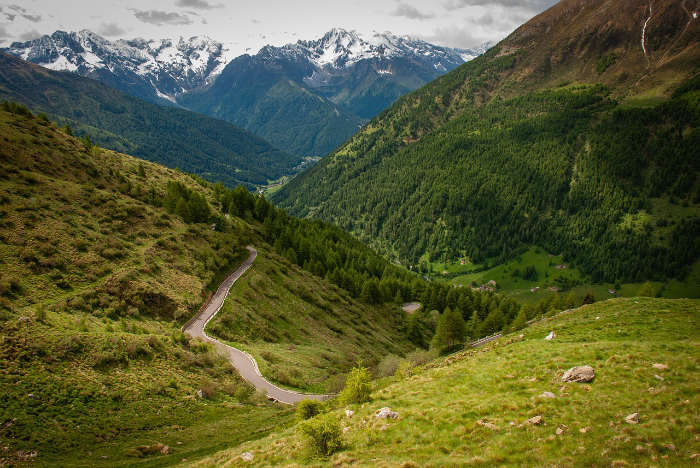
The Alps are one of Europe’s largest and most recognizable mountain systems, stretching across multiple countries in Central and Southern Europe. However, the exact list of “Alps countries” can vary depending on the source and definition being used.
Countries such as France, Italy, Switzerland, Austria, Germany, and Slovenia are universally recognized as Alpine nations because substantial portions of their territory lie within the Alps. The Alpine Convention—an international agreement focused on protecting and developing the Alpine region—also includes Liechtenstein and Monaco. Some broader geographic references additionally include countries such as Croatia, Bosnia and Herzegovina, Serbia, Albania, and Montenegro due to nearby mountain connections and regional proximity to the Alpine system.
Italy has the largest Alpine population in the dataset at roughly 30.6 million people, while Austria has the highest share of its land area classified as Alpine at approximately 28.7%. France and Germany also contain major Alpine regions, though the Alps make up a smaller percentage of their total territory.
Switzerland
Switzerland is a landlocked country in Central Europe that is known for its stunning Alpine scenery and its neutral stance in international politics. The Swiss Alps make up a significant portion of the country’s landscape and are a popular destination for skiing and hiking. Switzerland has a long history of neutrality and has not been involved in a major war since 1815. It is a federal parliamentary republic with 26 cantons, each of which has its own government and laws. The official language is German, but French, Italian, and Romansh are also spoken in different parts of the country.
Switzerland is also known for its high standard of living and its strong economy. The country has a highly developed banking and finance sector, and it is home to many international organizations, such as the World Health Organization and the International Committee of the Red Cross. While Switzerland’s neutrality has been criticized at times throughout history, the policy has also helped position the country as a neutral meeting ground for diplomacy and international organizations.
France
France is a country in Western Europe that is known for its rich culture and history. It is the largest country in the European Union and has a population of over 67 million people. The French Alps are a significant part of the country’s landscape and are a popular destination for skiing and other winter sports. France is a unitary semi-presidential republic with a strong central government. It is home to many famous museums, such as the Louvre and the Musée d’Orsay.
There are few that have not heard of this country, as it is a bastion for both fashion and cuisine. France is home to many tourists, some of whom have settled down here permanently or even to open successful businesses. Due to its mixed economy and unique position in the European Union, French leaders are often consulted on an international basis prior to making decisions.
Austria
Austria is another landlocked country in Central Europe that is known for its beautiful mountain scenery and its rich cultural heritage. The Austrian Alps make up a significant portion of the country’s landscape and are a popular destination for skiing and hiking - which are an attractive way for tourists to contribute to the Austrian economy.
Austria is a federal parliamentary republic with a strong central government. The official language is German, but many Austrians have also taken to learning English, French, and Spanish. The country has a long history of classical music and is home to many famous composers, such as Mozart and Strauss. Austria has a strong economy and is a member of the European Union.
It is known for its high standard of living and its low unemployment rate. The country is also a major tourist destination, with millions of visitors each year. It is home to many famous landmarks, such as the Hofburg Palace and the Schonbrunn Palace in Vienna.