Rice Belt States 2026
Rice Belt States
State | Rice Belt States↓ | Notes | |
|---|---|---|---|
 | Arkansas | Yes | |
 | Louisiana | Yes | |
 | Mississippi | Yes | |
 | Texas | Yes | |
 | California | No | |
 | Missouri | No | Missouri exempts Social Security benefits from state tax, provided that the individual is age 62 or older and has an adjusted gross income of less than $100,000 if married and filing jointly, or $85,000 for all other filing statuses. Those who earn more than that might qualify for the exemption if they're disabled |
 | Colorado | Colorado's pension-subtraction system exempts up to $24,000 in pension and annuity income, including some Social Security benefits. The exemption is based on your age, starting at age 55. | |
 | Connecticut | Connecticut partially or fully exempts Social Security benefits, based on a person's filing status and income | |
 | Kansas | Kansas exempts Social Security benefits from state tax, based on the taxpayer's income. Your Social Security benefits are exempt from Kansas income tax if your federal adjusted gross income (AGI) is $75,000 or less, regardless of your filing status | |
 | Minnesota | Minnesota partially taxes Social Security benefits. The state allows a subtraction from benefits ranging from $2,725 for married taxpayers who file separately to $4,260 for single taxpayers, and $5,450 for married taxpayers who file jointly. The rule is subject to phaseouts starting at incomes of $82,770 for joint married filers, $41,385 for married taxpayers filing separately, and $64,670 for heads of household and single filers. The subtraction is less for these incomes and eventually phases out entirely as you earn more | |
 | Montana | Montana asks residents to use the Montana Individual Income Tax Return to determine the portion of Social Security benefits that's taxable by the state. That might be different from the federal amount | |
 | Nebraska | Starting 2022, Nebraska began phasing out taxation of Social Security benefits. The state allows a deduction for Social Security income that's included in your federal adjusted gross income if your federal AGI is less than or equal to $61,760 for married couples filing jointly, or $45,790 for all other filers | |
 | New Mexico | Starting 2022, the state of New Mexico changed rules that now exempt most seniors from paying tax on Social Security benefits. This exemption is available to taxpayers with the following income thresholds: $100,000 for single filers, $150,000 for married filers filing jointly and heads of households, and $75,000 for married filers filing separately. | |
 | Rhode Island | Rhode Island has an exemption on Social Security taxation for those who have reached full retirement age as defined by the IRS. Eligible taxpayers must have federal AGIs of $88,950 if single, or $111,200 if married and filing jointly | |
 | Utah | In late 2019, Utah adopted a sweeping tax bill that includes a tax credit for Social Security benefits that are included in a taxpayer's federal adjusted gross income. The AGI thresholds are $31,000 for married filing separately, $62,000 for married filing jointly, and $37,000 for single filers | |
 | Vermont | Vermont previously followed the federal rules for determining the taxable portion of Social Security benefits, then it adopted exemptions for taxpayers with incomes below $25,000 for single filers and $32,000 for other statuses. Benefits for those with higher incomes are taxed at incremental levels, with no exemption available for AGIs of over $55,000 if single or over $70,000 if you're married and file jointly |
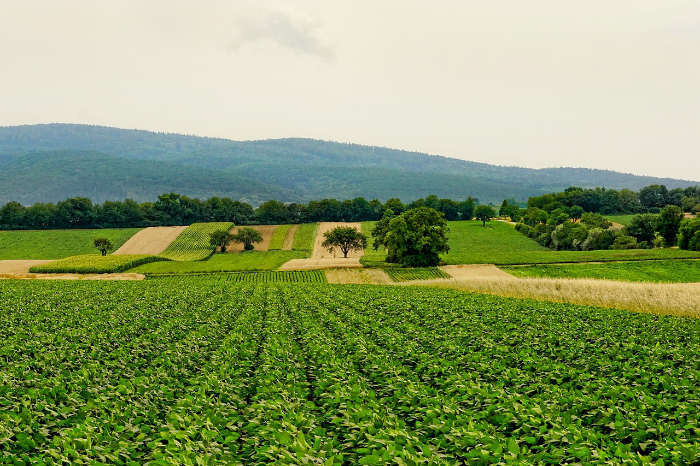
Some people might be surprised to hear that the United States actually grows a lot of rice annually. It might not be the exact same rice as the crop grown in Asia, but it is similar. There are different types of rice found all over the world, just as South American rice is very different from Asian rice as well. The states that are responsible for growing rice in the United States are called the rice belt.
What States Are a Part of the Rice Belt?
The rice belt in the United States includes four southern states that are responsible for a significant percentage of the rice crop in the country. They include Texas, Mississippi, Louisiana, and Arkansas. Of note, there is a significant overlap between the states that are responsible for growing rice and the states that are responsible for growing corn. Of these states, Arkansas produces the most rice in the country. Then, Louisiana, Mississippi, and Texas also produce fair amounts of rice.
What Is the Biggest Rice-Producing State in the United States Outside of the Belt?
Even though most of the rice in the United States is grown in the rice belt, there are states outside of the right belt that grow rice as well. For example, Missouri, which is significantly north of those other states, also grows a significant amount of rice. Missouri also grows plenty of corn, just like many of the other states in question. In addition, California also grows a lot of rice. The climate in California varies significantly from Northern California to Southern California. Therefore, California is able to grow a fair amount of rice as well, with much of the rice being grown in the northern part of the state.
Does the United States Export a Lot of Rice?
Some people might be surprised to hear that the United States actually exports a significant amount of rice as well. When compared to other serials grown in the United States, rice ranks third. Corn and wheat are the most common cereals in the United States, and rice comes in third place. Rice does require a lot of capital to grow, but it is also a profitable crop. Rice requires a lot of effort for proper irrigation. Otherwise, it will not grow well. The United States exports a significant amount of rice every year, and the rice travels all over the world.
At the same time, the United States also keeps a lot of rice at home. There are production centers located across the country, and they can convert rice into a variety of forms that can be used for different types of dishes. Because of the diverse cultures located in the United States, there are plenty of recipes that can be made using rice grown domestically.