Pit Bull Legal States 2026
Pitbull Legal Status
State | Pitbull Legal Status↓ | Additional Pit Bull Legality Details | |
|---|---|---|---|
 | Alaska | Legal | Breed-specific laws are prohibited |
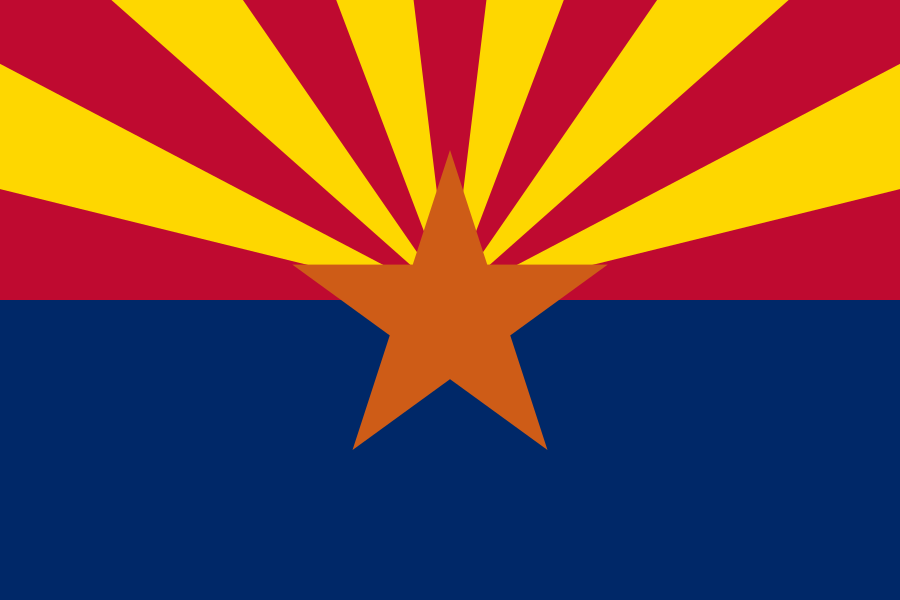 | Arizona | Legal | Breed-specific laws are prohibited |
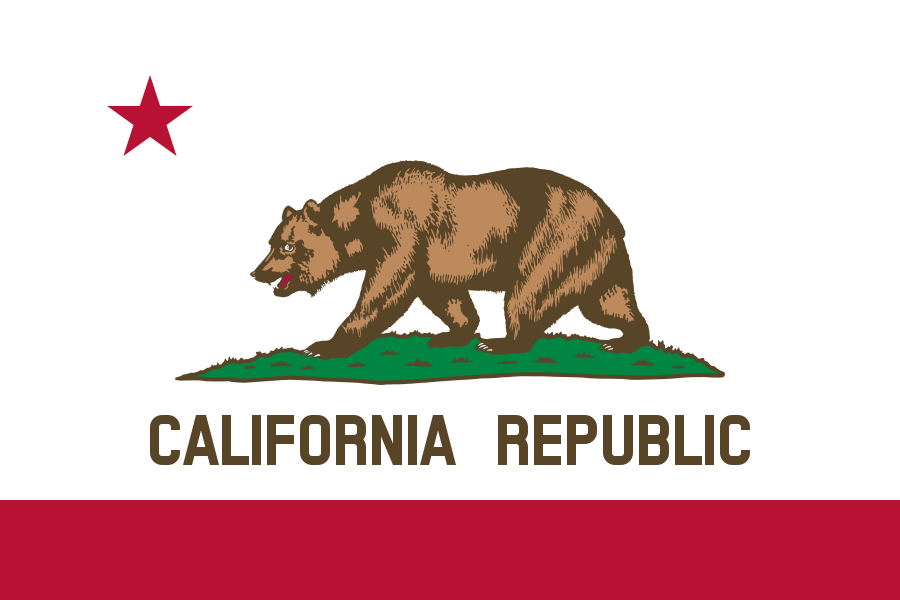 | California | Legal | Breed-specific laws are prohibited |
 | Colorado | Legal | Breed-specific laws are prohibited |
 | Connecticut | Legal | Breed-specific laws are prohibited |
 | Delaware | Legal | Breed-specific laws are prohibited |
 | Florida | Legal | Breed-specific laws are prohibited |
 | Hawaii | Legal | None |
 | Illinois | Legal | Breed-specific laws are prohibited |
 | Maine | Legal | Breed-specific laws are prohibited |
 | Massachusetts | Legal | Breed-specific laws are prohibited |
 | Minnesota | Legal | Breed-specific laws are prohibited |
 | Nevada | Legal | Breed-specific laws are prohibited |
 | New Hampshire | Legal | None |
 | New Jersey | Legal | Breed-specific laws are prohibited |
 | New York | Legal | Breed-specific laws are prohibited |
 | Oklahoma | Legal | Breed-specific laws are prohibited |
 | Pennsylvania | Legal | Breed-specific laws are prohibited |
 | Rhode Island | Legal | None |
 | South Dakota | Legal | Breed-specific laws are prohibited |
 | Texas | Legal | Breed-specific laws are prohibited |
 | Utah | Legal | Breed-specific laws are prohibited |
 | Virginia | Legal | Breed-specific laws are prohibited |
 | Alabama | Legal with restrictions | In the cities of Center Point, Irondale, Lanett, and Midfield, pit bulls are considered dangerous or vicious and breed-specific laws must be followed. |
 | Arkansas | Legal with restrictions | Pit bulls are banned in 30 cities |
 | Georgia | Legal with restrictions | In eight cities, pit bulls are considered dangerous or vicious and Breed-Specific Laws must be followed. |
 | Idaho | Legal with restrictions | Fruitland, Idaho Falls, and Payette County pit bulls are considered dangerous or vicious and breed-specific laws must be followed. |
 | Indiana | Legal with restrictions | Fowler has a complete ban on pit bulls. In Gary, Mishawaka, and South Bend pit bulls are considered dangerous or vicious and breed-specific laws must be followed. |
 | Iowa | Legal with restrictions | 91 cities have a ban on owning more than one pit bull. 72 cities have a complete ban on pit bulls. |
 | Kansas | Legal with restrictions | 77 cities have a complete ban on pit bulls. 13 cities consider pit bulls dangerous or vicious and breed-specific laws must be followed. |
 | Kentucky | Legal with restrictions | Multiple cities have strict bans in place for pit bulls. |
 | Louisiana | Legal with restrictions | Multiple cities have rules or total ban on pit bulls. |
 | Maryland | Legal with restrictions | Prince George’s County limits pit bull ownership. |
 | Michigan | Legal with restrictions | Most cities across Michigan have some type of ban against pit bulls and several other bully breeds. |
 | Mississippi | Legal with restrictions | 46 municipalities in Mississippi have bans or legislation regulating pittie ownership. |
 | Missouri | Legal with restrictions | More than 70 cities have some type of breed-specific legislation that applies to pit bulls. In certain cities, owning a pittie is punishable by fines and jail time |
 | Montana | Legal with restrictions | Baker, Libby, Lincoln County ,and White Sulphur Springs have bans on pit bulls. |
 | Nebraska | Legal with restrictions | In some cities, pit bulls are considered dangerous or vicious and breed-specific laws must be followed. |
 | New Mexico | Legal with restrictions | In some cities, pit bulls are considered dangerous or vicious and breed-specific laws must be followed. |
 | North Carolina | Legal with restrictions | In Edenton, pit bulls are considered dangerous or vicious and breed-specific laws must be followed. |
 | North Dakota | Legal with restrictions | In Minot, pit bulls are considered dangerous or vicious and breed-specific laws must be followed. |
 | Ohio | Legal with restrictions | More than 80 cities have a complete ban on pit bulls. |
 | Oregon | Legal with restrictions | In some cities, pit bulls are considered dangerous or vicious and breed-specific laws must be followed. |
 | South Carolina | Legal with restrictions | In Beaufort County, pit bulls are required by law to be sterilized. In Dillon, Ware Shoals, and Travelers Rest, pit bulls are considered dangerous or vicious and breed-specific laws must be followed. |
 | Tennessee | Legal with restrictions | In some cities, pit bulls are considered dangerous or vicious and breed-specific laws must be followed. |
 | Vermont | Legal with restrictions | Montgomery is the only town where pit bulls are not allowed; the state has no "dangerous" or "vicious" dogs list and rules. |
 | Washington | Legal with restrictions | In some cities, pit bulls are considered dangerous or vicious and breed-specific laws must be followed. |
 | West Virginia | Legal with restrictions | In Ceredo, pit bulls are completely banned. In many other cities, pit bulls are considered dangerous or vicious and breed-specific laws must be followed. |
 | Wisconsin | Legal with restrictions | More than 60 Wisconsin municipalities have labeled pit bulls as “vicious” and/or banned them. |
 | Wyoming | Legal with restrictions | Manderson has banned pit bulls and some cities have have breed restrictions. |
States Where Pit Bulls Are Fully Legal (No Breed-Specific Laws)
In some states, pit bulls are fully legal and protected from breed-specific legislation (BSL). These states prohibit cities and counties from banning or targeting specific breeds, meaning pit bulls are regulated like any other dog under general animal control laws.
States in this category include Alaska, Arizona, California, Colorado, Connecticut, Delaware, Florida, Illinois, Maine, Massachusetts, Minnesota, Nevada, New Jersey, New York, Oklahoma, Pennsylvania, South Dakota, Texas, Utah, and Virginia. In Hawaii, New Hampshire, and Rhode Island, pit bulls are also legal, though no explicit statewide BSL ban is noted.
States Where Pit Bulls Are Legal with Local Restrictions
Many states allow pit bulls at the state level but permit local governments to impose restrictions, bans, or special rules. In these states, legality depends heavily on the city or county, not just the state itself.
States with local restrictions include Alabama, Arkansas, Georgia, Idaho, Indiana, Iowa, Kansas, Kentucky, Louisiana, Maryland, Michigan, Mississippi, Missouri, Montana, Nebraska, New Mexico, North Carolina, North Dakota, Ohio, Oregon, South Carolina, Tennessee, Vermont, Washington, West Virginia, Wisconsin, and Wyoming. In these areas, some municipalities enforce outright bans, while others classify pit bulls as dangerous or impose requirements such as sterilization, registration, or confinement rules.