Pull Tabs Legal States 2026
Pull Tabs Legality
State | Pull Tabs Legality↓ | Additional Details | |
|---|---|---|---|
 | Nevada | No specific regulation | There is no specific regulation against pull-tabs but they fall into a penumbra of illegality in Nevada. |
 | Alaska | Legal | |
 | Arizona | Legal | |
 | Arkansas | Legal | In Arkansas, that state’s Senate Judiciary Committee has approved SB 496 to prohibit Alcoholic Beverage Control Division agents from enforcing rules against gambling devices in permitted businesses. The bill also authorizes the sale of pull-tab cards. |
 | California | Legal | |
 | Colorado | Legal | |
 | Connecticut | Legal | Permit required. |
 | Delaware | Legal | |
 | Florida | Legal | |
 | Idaho | Legal | |
 | Illinois | Legal | Must be licensed by the state. |
 | Indiana | Legal | |
 | Iowa | Legal | |
 | Kansas | Legal | |
 | Kentucky | Legal | |
 | Louisiana | Legal | |
 | Maine | Legal | |
 | Maryland | Legal | The holder of such a permit shall be subject to the provisions of § 13 (Bingo) and §13-203 (Pull-Tabs) of the Criminal Law Article of the Annotated Code of Maryland as amended from time to time. |
 | Massachusetts | Legal | Pull Tab tickets are to be played on Massachusetts Lottery licensed premises only. They must be cashed in by the close of business on the same day and at the same location where they were purchased. This is one area where Pull Tabs differ from instant tickets. |
 | Michigan | Legal | Pull tabs are legal in Michigan as a form of charitable gaming. The Michigan Gaming Control Board regulates charitable gaming, and licensed organizations may offer various games, including pull tabs. |
 | Minnesota | Legal | Pull tabs are legal in Minnesota and are one of the most popular forms of charitable gaming in the state. The Minnesota Gambling Control Board is responsible for regulating and overseeing charitable gaming, and licensed organizations may offer various games, including pull tabs. |
 | Mississippi | Legal | |
 | Missouri | Legal | Only private fraternal organizations are allowed to possess pull-tab machines. |
 | Montana | Legal | Montana casinos are allowed a maximum of 20 machine games in one facility, live poker, raffle tickets and pull-tabs. Most are located in bars and small, local venues.Video gaming was first legalized in 1976 after a Montana Supreme Court ruled that video keno was a form of live bingo, and therefore legal. |
 | Nebraska | Legal | |
 | New Hampshire | Legal | |
 | New Jersey | Legal | The control commission’s regulations shall allow the punch25 board games to be conducted "under the same license issued for the conduct of pull-tab raffle games." |
 | New Mexico | Legal | Pull tabs can be sold by qualified organization pursuant to the rules set out in 15.4.9.1 NMAC. Organizations that May Conduct Certain Games of Chance Under Limited Circumstances Without Obtaining a License Limited exemptions under the Bingo and Raffle Act. |
 | New York | Legal | |
 | North Carolina | Legal | |
 | North Dakota | Legal | |
 | Ohio | Legal | In Ohio, pull tabs are legal for certain organizations that have obtained a license from the Ohio Attorney General's Office, including charitable, religious, fraternal, and veterans' organizations. These organizations must meet certain eligibility requirements and follow specific rules and regulations set by the Ohio Charitable Gaming Division. |
 | Oregon | Legal | In Oregon, pull tabs are allowed as a form of charitable gaming under the supervision of the Oregon Department of Justice, Charitable Activities Section. Charitable organizations must obtain a license to conduct pull tabs and follow specific rules and regulations governing the operation of the games. |
 | Pennsylvania | Legal | In Pennsylvania, pull tabs are also legal and are offered as a form of small games of chance. The Pennsylvania Gaming Control Board is responsible for regulating and overseeing small games of chance, including pull tabs, and ensuring that organizations conducting such games are properly licensed and in compliance with the applicable laws and regulations. |
 | Rhode Island | Legal | |
 | South Carolina | Legal | The sale of pull-tabs by licensed charitable organizations during authorized sessions pursuant to the provisions of this Chapter shall constitute charitable gaming. |
 | Vermont | Legal | |
 | Virginia | Legal | |
 | Washington | Legal | |
 | West Virginia | Legal | |
 | Wisconsin | Legal | |
 | Wyoming | Legal | Must be 18 to play bingo, unless accompanied by a parent, guardian, or of-age spouse. |
 | Alabama | Illegal | |
 | Georgia | Illegal | |
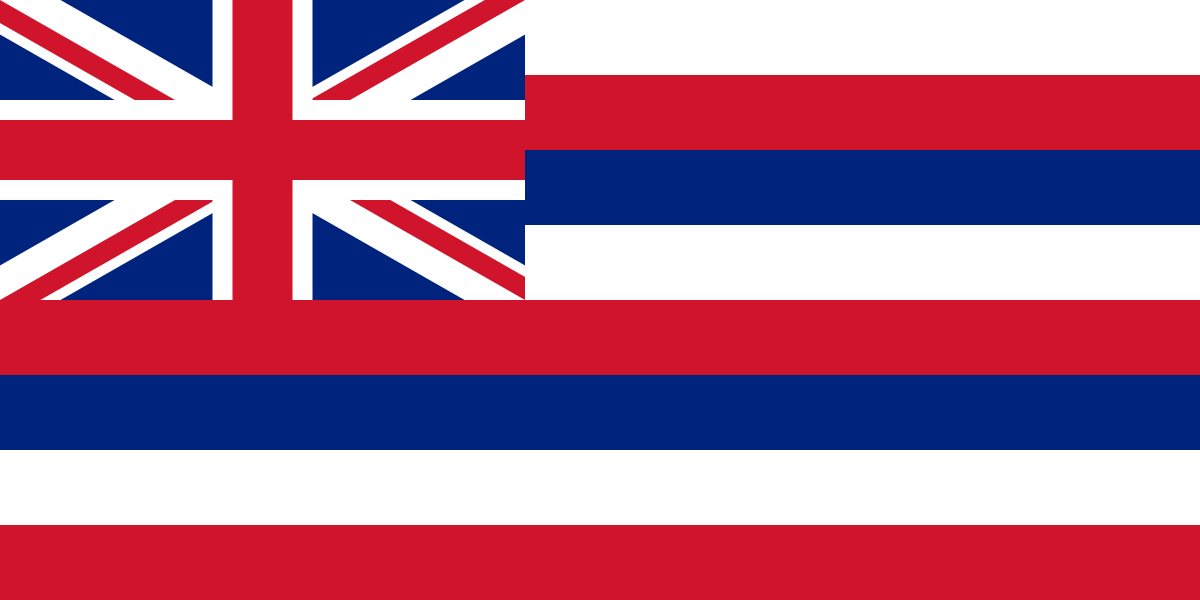 | Hawaii | Illegal | |
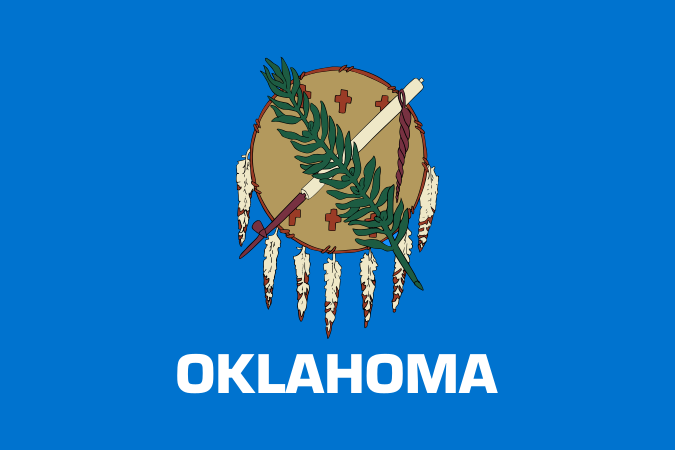 | Oklahoma | Illegal | |
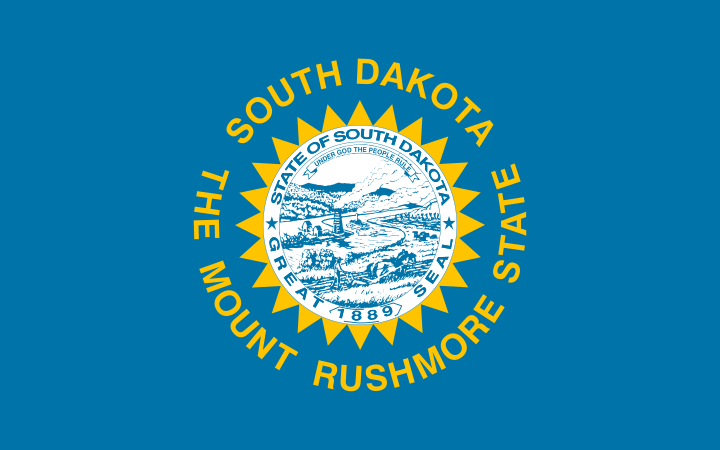 | South Dakota | Illegal | |
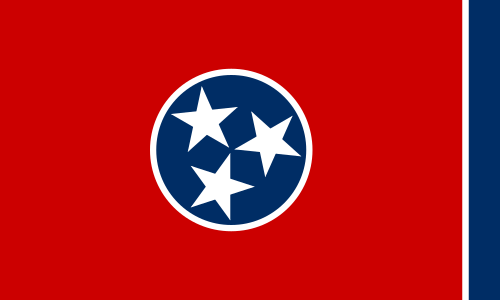 | Tennessee | Illegal | |
 | Texas | Illegal | |
 | Utah | Illegal |
- Laws regarding the legality of pull-tab machines may change at any time. Interested parties are encouraged to confirm legality with local authorities.
States Where Pull Tabs Are Legal
Pull-tab games are legal in most U.S. states, but they are typically regulated as a form of charitable gaming rather than open commercial gambling. In practice, this means they are most often operated by nonprofit, religious, or fraternal organizations under state oversight, rather than being freely available in all retail settings.
States in this category include Alaska, Arizona, Arkansas, California, Colorado, Connecticut, Delaware, Florida, Idaho, Illinois, Indiana, Iowa, Kansas, Kentucky, Louisiana, Maine, Maryland, Massachusetts, Michigan, Minnesota, Mississippi, Missouri, Montana, Nebraska, New Hampshire, New Jersey, New Mexico, New York, North Carolina, North Dakota, Ohio, Oregon, Pennsylvania, Rhode Island, South Carolina, Vermont, Virginia, Washington, West Virginia, Wisconsin, and Wyoming. While broadly legal, many of these states require licenses, restrict play to approved venues, or limit operation to qualified organizations.
States Where Pull Tabs Are Legal with Conditions
In many states, pull-tab games are legal but only under specific conditions that limit how and where they can be played. These rules often focus on licensing, approved venues, and who is allowed to operate the games, reinforcing their role as regulated charitable gaming rather than unrestricted gambling.
Common restrictions include requiring state-issued licenses (such as in Connecticut and Illinois), limiting play to licensed premises or same-day redemption (Massachusetts), or allowing only certain organizations to operate games (such as charitable or fraternal groups in states like Michigan, Minnesota, and Ohio). In Missouri, for example, pull-tab machines are restricted to private fraternal organizations, while in states like Oregon and Pennsylvania, detailed oversight governs how games are conducted and who can offer them.
States with No Clear or Specific Regulation
A small number of states do not have clear, direct laws addressing pull-tab games. In these cases, legality is not explicitly defined, and the games may fall into a gray area depending on how broader gambling laws are interpreted.
Nevada is the primary example. While there is no specific regulation targeting pull-tabs, they exist in a legal gray zone and may be treated as unauthorized gambling devices depending on context. This uncertainty makes availability inconsistent and highly dependent on enforcement and interpretation rather than a clear statewide policy.
States Where Pull Tabs Are Illegal
In some states, pull-tab games are prohibited entirely, with laws that restrict or ban most forms of gambling outside of tightly controlled exceptions. These states do not authorize pull-tabs as part of their legal gambling framework.
States where pull tabs are illegal include Alabama, Georgia, Hawaii, Oklahoma, South Dakota, Tennessee, Texas, and Utah. In these states, operating or participating in pull-tab games is generally not permitted under current law.
Sources
- Tex. Admin. Code § 402.301 - Approval of Pull-Tab Bingo Tickets - Cornell Law School
- New Hampshire - Gambling Law US
- Office of Charitable Gaming - Louisiana.gov
- Title 820 | Chapter 001 | Regulation 032 - Kentucky General Assembly
- Pull-Tabs Gaming Law - US Legal Definitions
- Charitable Gaming - Arizona Department of Gaming
- Electronic Pull Tabs to Continue in Idaho - Idaho News
- Senate Bills - Indiana Gaming Commission
- 2025 Regular Session - Senate Bill 667 Chapter - Maryland.gov
- Charitable Gaming - Kansas Revenue
- Charitable Bingo Law - Justia Law
- Statutes - Vermont General Assembly
- Is Bingo Legal in Alabama - Party Shop Maine
- Bingo Transition Information - Connecticut State Portal
- Assembly No 4464 - New Jersey Legislature
- Pull Tab & Jar Games Tax & License Fees - Illinois Department of Revenue
- Georgia Gambling Laws - FindLaw
- Charitable Bingo and Raffle Rule - Arkansas Dept of Finance and Administration
- Gambling Review - New Mexico Gaming Control Board
- Charitable Gambling in Minnesota - Minnesota House of Representatives
- Question of the Day - Las Vegas Advisor
- Alaska Gambling Laws - Let's Gamble USA
- Charitable Gaming - Maine.gov
- Charity Game Tickets - Michigan.gov
- Legal-Age Gambling Opportunities and Restrictions - National Center for Biotechnology Information
- Charitable Gaming - Ohio Attorney General
- Delaware Tribe Loses Suit On Video Pull-Tab Gambling - The Oklahoman
- Hawaii Revised Statutes - 712-1223 Gambling - Justia
- Gambling Offenses - Oregon Legislative Assembly
- Nebraska Gambling Legal Status - Perky Bets
- Pull-Tab Plans: Senate Okays Adding Machines to Missouri Truck Stops - St. Louis Post-Dispatch
- North Dakota Changes Its E-Pull-Tabs Regulations - USA Gambling Sites