Wolfdog Legal States 2026
Wolfdog Legality
State | Wolfdog Legality↓ | Additional Wolfdog Legality Details | |
|---|---|---|---|
 | California | Legal w/permit | Certain wolfdog hybrids (F1 and their progeny as specified) are allowed under state permit conditions, while cities and counties may impose additional restrictions or bans. Pure wolves are prohibited unless a valid Fish and Game permit is obtained, which requires strict facility standards, experience, and USDA approval. |
 | Delaware | Legal w/permit | Wolfdog possession requires state permits with strict enclosure, inspection, and containment requirements. Additionally, some counties (e.g., New Castle and Kent) prohibit wolfdogs entirely. |
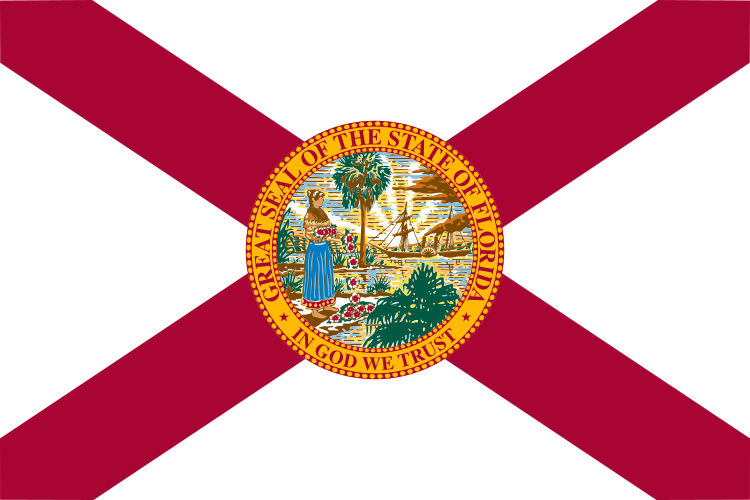 | Florida | Legal w/permit | Wolfdogs (depending on wolf content) require a state permit, with mandatory experience/training, housing standards, and containment requirements. Higher wolf-content animals (75% or more) are classified as Class II wildlife and must meet stricter permitting rules. |
 | Idaho | Legal w/permit | Wolfdogs exhibiting primary wolf characteristics require a state license within a short timeframe, including identification (tattooing) by a veterinarian and formal application submission. |
 | Kentucky | Legal w/permit | Wolves and wolfdogs (over 25% wolf) are considered inherently dangerous and cannot be imported or possessed without approval, and permits are denied where local ordinances prohibit them. Local governments may regulate or ban possession within their jurisdictions. |
 | Maryland | Legal w/permit | Wolfdog hybrids require a permit if there is no USDA-certified rabies vaccine. Ownership or movement within the state is not allowed without obtaining this permit. |
 | Mississippi | Legal w/permit | Wolfdog hybrids are classified as inherently dangerous wild animals and require an individual permit for each animal. Permit requirements include liability insurance, microchipping, health records, and compliance with containment provisions. |
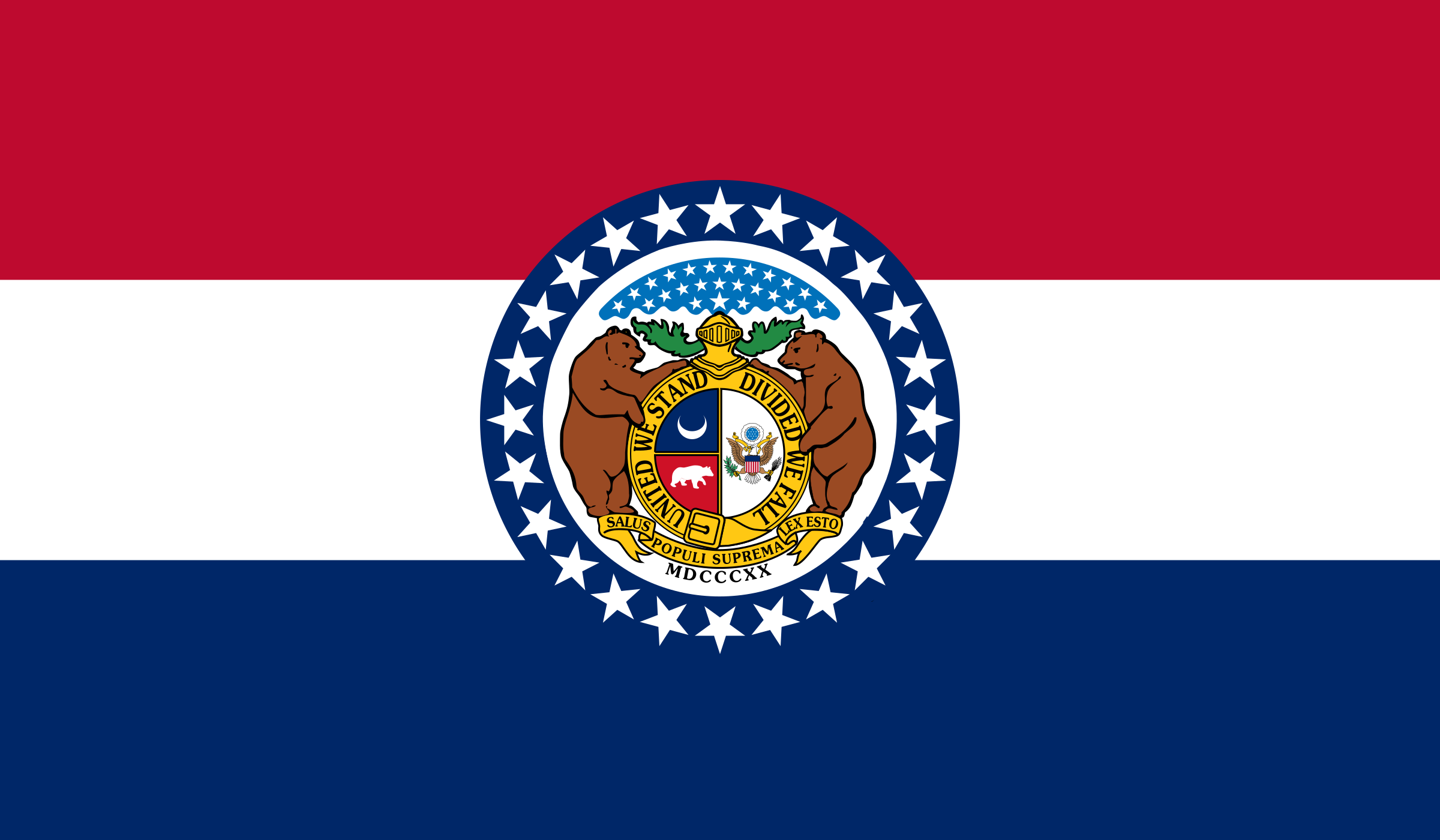 | Missouri | Legal w/permit | Wolfdog hybrids are classified as Class II wildlife and require a permit or exemption, with minimum containment standards and recordkeeping requirements. |
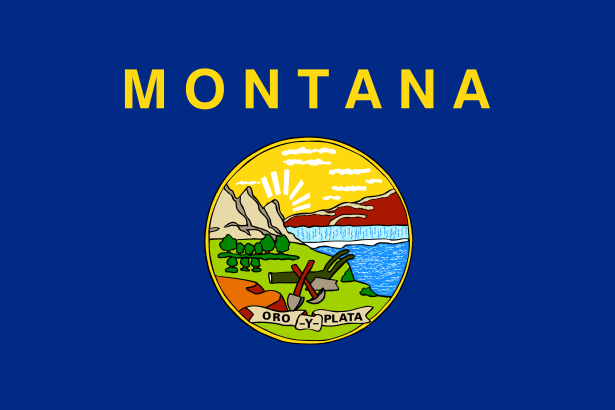 | Montana | Legal w/permit | Wolfdogs that are 50% or more wolf are classified as wolves and must be tattooed and registered with the Department of Fish, Wildlife and Parks. Owners are also liable for any damages caused by the animal if it escapes. |
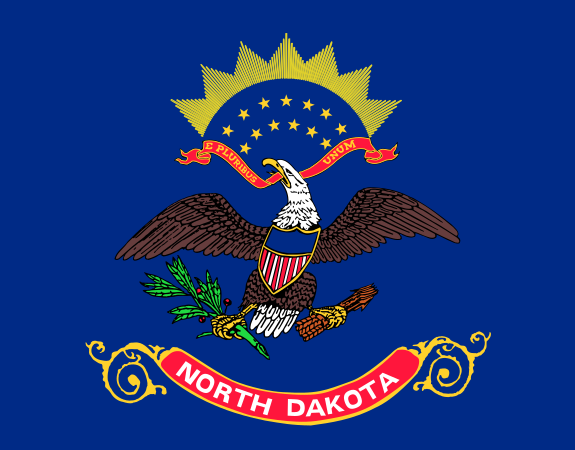 | North Dakota | Legal w/permit | Wolfdog hybrids are classified as Category 4 nontraditional livestock and require a permit and health certificate for importation. They must meet secure containment requirements and be under direct control when around persons other than the owner or immediate family. |
 | South Dakota | Legal w/permit | Wolfdog hybrids are classified as non-domestic animals and require a permit for possession, along with annual application and permanent identification (tattoo, ear tag, or electronic microchip). |
 | Arkansas | Legal (regulated) | Ownership is allowed but strictly regulated, including mandatory vaccination, detailed record-keeping, and secure double-fence enclosures. Local governments may impose additional restrictions or bans. |
 | Arizona | Legal | |
 | Colorado | Legal | Pure wolves are regulated separately and require licensing. |
 | Indiana | Legal | Wolfdog hybrids are not regulated by the state and do not require a permit. Pure wolves require permits and are regulated separately under wildlife rules. |
 | Iowa | Legal | Wolfdog hybrids are regulated as dogs under state rules and must meet entry and veterinary requirements (including rabies vaccination and health certification). Local municipalities may impose additional ordinances that supersede state-level rules. |
 | Kansas | Legal | Wolfdog hybrids are not considered wild animals and are not regulated by the Department of Wildlife. Pure wolves require a possession permit and may be subject to additional local ordinances. |
 | Louisiana | Legal | The prohibition against wolf-dog hybrids expired January 1, 1997; however, local ordinances or other regulations may still prohibit possession. Animals that appear indistinguishable from wolves or are represented as wolves may be considered wolves without proper documentation. |
 | Maine | Legal | Wolfdog hybrids must be licensed by the owner or keeper, and the license may be issued without proof of rabies vaccination if declared as a wolf hybrid. They are subject to strict control measures, including possible seizure/euthanasia if they bite. |
 | Minnesota | Legal | Wolfdog hybrids are not regulated at the state level, but local ordinances may prohibit them. Owners may be required to show proof that the animal is a hybrid if it closely resembles a pure wolf. |
 | Nevada | Legal | Wolfdog hybrids are not regulated at the state level, but local county or city ordinances may impose additional restrictions or requirements. |
 | New Jersey | Legal | Wolfdog hybrids are not regulated at the state level, but wolves are prohibited as pets. Local rules or other regulations may still apply in certain cases. |
 | New Mexico | Legal | Wolfdog hybrids are not regulated by the state Game & Fish Department, but local jurisdictions such as Bernalillo County and the City of Albuquerque prohibit them, with grandfathering for existing animals. Breeding and selling are banned locally, and permits/licenses may be required for existing animals. |
 | North Carolina | Legal | Wolfdog hybrids are not recognized as wild animals by the Commission and therefore are not regulated under wildlife captivity licensing requirements. Pure wolves require a wildlife captivity license. |
 | Ohio | Legal | |
 | Oklahoma | Legal | |
 | Oregon | Legal | Wolfdog hybrids are not regulated at the state level and are managed by local jurisdictions, which may impose their own rules. They are typically licensed under dog control ordinances, though local regulations may vary. |
 | South Carolina | Legal | Wolfdog hybrids are not recognized as wild animals by the Commission, but importation of hybrids that are 25% or more wolf is prohibited. Possession of in-state purchased wolfdogs may be allowed under local rules, while wildlife captivity licenses are required for wolves. |
 | Tennessee | Legal | |
 | Texas | Legal | |
 | Utah | Legal | Wolf hybrids are treated as domestic dogs at the state level; however, local ordinances may impose additional restrictions. Pure wolves require multiple permits and are otherwise not generally allowed to be possessed. |
 | Vermont | Legal | Wolf hybrids are regulated similarly to domestic pets under state law, but importation requires a permit and there are strict rabies-related provisions and possible local restrictions. |
 | Virginia | Legal | Pure wolves are prohibited for private ownership. Wolf hybrids are not regulated at the state level but may be regulated by local ordinances, which can require permits and impose ownership, containment, and identification rules. |
 | Washington | Legal | State law does not regulate wolf hybrids at the state wildlife agency level, but local governments may regulate or ban them. Some areas (e.g., King County) prohibit possession entirely. Pure wolves are heavily restricted and require proof of legal acquisition and proper permits/facilities. |
 | West Virginia | Legal | Although wolf hybrids with more than 1% dog lineage are treated as dogs and fall outside Fish and Game jurisdiction, importation is not allowed, which effectively prohibits bringing them into the state. Local ownership nuances may exist, but importation restriction makes it functionally prohibited. |
 | Wisconsin | Legal | Pure wolves are illegal except by permit for zoological, educational or scientific purposes or propagation for preservation purposes. Hybrids are not regulated |
 | Alabama | Illegal (with grandfather exception) | Ownership of canidae without a USDA-licensed rabies vaccine is illegal, but animals owned before April 5, 1994 can be kept for life if sterilized and registered. Wolf-dog hybrids are treated as “dogs” under rabies rules, but legal uncertainty remains due to older conflicting law. |
 | Georgia | Illegal (with grandfather exception) | Wolfdogs are classified as wild animals and generally cannot be possessed as pets. A limited grandfather provision allowed fee-exempt permits for animals already owned before July 1, 1994, if neutered and not transferred without approval. |
 | Massachusetts | Illegal (with grandfather exception) | Wolfdog hybrids obtained after April 10, 1994 are prohibited; existing pets were grandfathered if registered by July 1, 1994, and may not be bred. Registered hybrids require documentation including photographs and are subject to wildlife law enforcement provisions. |
 | Michigan | Illegal (with grandfather exception) | Wolf-dog crosses are prohibited, but animals that existed prior to the regulation may be kept under an annual permit with requirements including sterilization, permanent identification, strict containment, and warning signage. Local jurisdictions handle permitting and enforcement. |
 | New Hampshire | Illegal (with grandfather exception) | Wolfdog possession is prohibited except for limited grandfathered animals owned prior to June 6, 1994, temporary competitive events, or specific import cases with sterilization and documentation. Owners must maintain licensing, vaccination records, and meet containment requirements. |
 | Alaska | Illegal | Permits are required to possess live game, but cannot be issued for hybrids (including wolfdogs) kept as pets. Wolves are classified as “game,” so wolfdog ownership as pets is prohibited. |
 | Connecticut | Illegal | |
 | District of Columbia | Illegal | |
 | Hawaii | Illegal | |
 | Illinois | Illegal | |
 | Nebraska | Illegal | Wolfdogs are not explicitly regulated, but any animal that resembles a wolf may be classified as a wolf, which is prohibited to possess under state law. |
 | New York | Illegal | |
 | Pennsylvania | Illegal | |
 | Rhode Island | Illegal | |
 | Wyoming | Illegal |
- In many states, counties, cities, and towns, it is illegal to own a wolf dog. Even if it is legal, there are likely to be restrictions on what percentage wolf can be owned and/or requirements for owners to acquire additional permits to keep a wolf dog legally. It is imperative for anyone interested in owning a wolf dog to research thoroughly and comply with all laws and permitting requirements at the state and local levels prior to acquiring a wolf dog.
States Where Wolfdogs Are Legal With a Permit
Eleven states allow wolfdog ownership but require a state-issued permit: California, Delaware, Florida, Idaho, Kentucky, Maryland, Mississippi, Missouri, Montana, North Dakota, and South Dakota.
Permits typically come with strict requirements, including secure enclosures, animal identification, inspections, and, in some cases, proof of experience or liability coverage. Rules often vary based on the wolf content of the animal, with higher-percentage hybrids subject to tighter restrictions, and local governments may impose additional limits or bans.
States Where Wolfdogs Are Legal
Twenty-six states allow wolfdog ownership under state law: Arizona, Arkansas, Colorado, Indiana, Iowa, Kansas, Louisiana, Maine, Minnesota, Nevada, New Jersey, New Mexico, North Carolina, Ohio, Oklahoma, Oregon, South Carolina, Tennessee, Texas, Utah, Vermont, Virginia, Washington, West Virginia, Wisconsin, and North Carolina.
In many of these states, wolfdogs are not regulated at the state level and may be treated similarly to domestic dogs. However, local governments often set their own rules, meaning ownership can still be restricted or banned at the county or city level.
States Where Wolfdogs Are Illegal or Restricted
Fourteen states and the District of Columbia prohibit wolfdog ownership or allow it only under narrow exceptions: Alabama, Georgia, Massachusetts, Michigan, New Hampshire, Alaska, Connecticut, District of Columbia, Hawaii, Illinois, Nebraska, New York, Pennsylvania, Rhode Island, and Wyoming.
Some of these states include grandfather provisions that allow previously owned animals under strict conditions, such as registration, sterilization, and containment. In others, ownership is fully prohibited, and even animals that resemble wolves may be classified as such under state law.
Sources
- Are Wolf Dogs Legal? Navigating the Laws in The United States - Living Tiny With A Wolf
- Exotic Animal Laws by State - FindLaw
- What Is A Wolf Dog? - Wolf Sanctuary
- Wolf-dog hybrids - International Wolf Center
- Rules and Regulations - Florida Fish and Wildlife Conservation Commission
- Standard Caging Requirements for Wild Canids - Florida Department of State
- Wildlife And Fisheries - Louisiana Division of Administration
- Facility Licenses - Maine Legislature
- Article - Natural Resources - Maryland General Assembly
- Article - Health - General - Maryland General Assembly
- Wildlife as pets - Massachusetts Government
- Mass General Law 1-XIX-131-77A - Massachusetts Legislature
- New York Environmental Conservation Law Section 11-0103 - Legislation - NY Senate
- 2024 Minnesota Statutes - Minnesota Legislature
- 40 Miss. Code. R. 2-8.3 - Cornell Law School
- Chapter 137. Wildlife - Pennsylvania Code & Bulletin
- Health And Safety Code - Texas Constitution and Statutes
- Administrative Rules - South Dakota Legislature
- Chapter 40 - Agriculture And Resource Marketing - Rhode Island Department of Environmental Management
- tate Regulations as they Pertain to Wolves and Wolfdogs - Wolf Song of Alaska