Baton Legal States 2026
Stun Baton Legal Status
State | Stun Baton Legal Status↓ | Relevant Stun Baton Legal Code | |
|---|---|---|---|
 | Alabama | Legal | |
 | Alaska | Legal | |
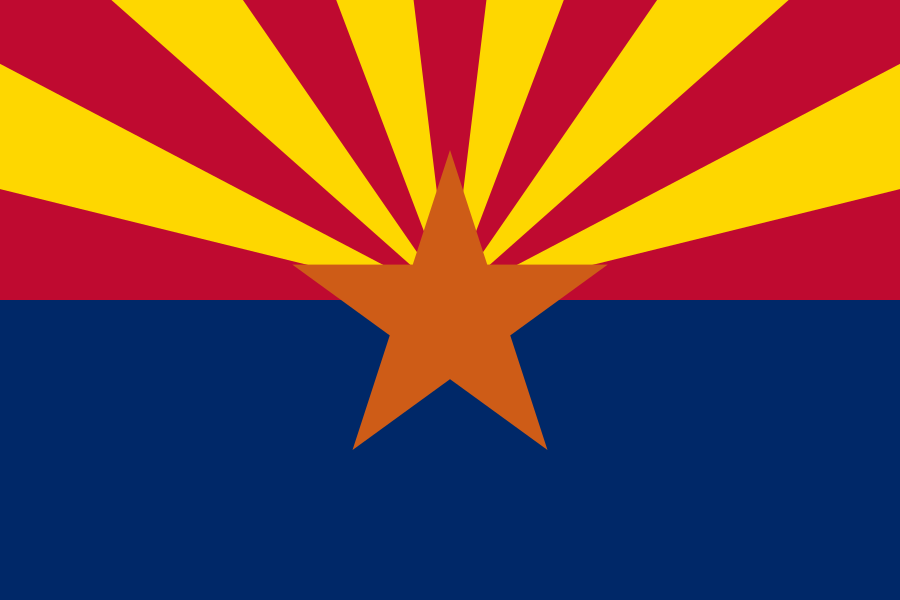 | Arizona | Legal | |
 | Arkansas | Legal | |
 | Colorado | Legal | |
 | Connecticut | Legal | |
 | Delaware | Legal | |
 | District of Columbia | Legal | |
 | Florida | Legal | |
 | Georgia | Legal | |
 | Idaho | Legal | |
 | Indiana | Legal | |
 | Iowa | Legal | |
 | Kansas | Legal | |
 | Kentucky | Legal | |
 | Louisiana | Legal | |
 | Maine | Legal | |
 | Maryland | Legal | |
 | Minnesota | Legal | |
 | Mississippi | Legal | |
 | Missouri | Legal | |
 | Montana | Legal | |
 | Nebraska | Legal | |
 | Nevada | Legal | |
 | New Hampshire | Legal | |
 | New Jersey | Legal | |
 | New Mexico | Legal | |
 | North Carolina | Legal | |
 | North Dakota | Legal | |
 | Ohio | Legal | |
 | Oklahoma | Legal | |
 | Oregon | Legal | |
 | Pennsylvania | Legal | |
 | South Carolina | Legal | |
 | South Dakota | Legal | |
 | Tennessee | Legal | |
 | Texas | Legal | |
 | Utah | Legal | |
 | Vermont | Legal | |
 | Virginia | Legal | |
 | Washington | Legal | |
 | West Virginia | Legal | |
 | Wyoming | Legal | |
 | California | Legal w/ Restrictions | Penal Code Section 22610 |
 | Illinois | Legal w/ Restrictions | 720 Illinois Compiled Statutes 5/24-1 |
 | New York | Legal w/ Restrictions | Penal Law Section 265.01 |
 | Hawaii | Illegal | Hawaii Revised Statutes Section 134-1 |
 | Massachusetts | Illegal | Massachusetts General Laws Chapter 140, Section 131J |
 | Michigan | Illegal | Michigan Compiled Laws Section 750.224a |
 | Rhode Island | Illegal | Rhode Island General Laws Section 11-47-42 |
 | Wisconsin | Illegal | Wisconsin Statutes Section 941.295 |
- Data validated Feb 2025. Stun baton laws may change at any time, and stun batons may be regulated or prohibited at the county or municipal level even in states in which they are legal at the state level. Interested parties are encouraged to confirm legality with local authorities.
States in Which Stun Batons Are Legal to Own
Stun batons are legal to own in most states. In California, Illinois, and New York, stun batons are legal with certain restrictions under state law. In Hawaii, Massachusetts, Michigan, Rhode Island, and Wisconsin, stun batons are illegal to possess.
Because there is no broad federal prohibition on stun batons, legality is primarily determined at the state level. It is also important to check local laws for updates, as specific jurisdictions within states may have their own regulations and ordinances.
Can Stun Batons Cause Serious Injuries?
Although stun batons are generally considered non-lethal self-defense devices, misuse or improper application can still cause injury. The electric shock is intended to temporarily incapacitate a person, but health risks may exist depending on underlying medical conditions or how the device is used. For this reason, some states regulate or prohibit stun batons under their weapons laws.
Reasons Law Enforcement May Carry Batons
Law enforcement officers often carry impact batons as part of their standard equipment. These traditional batons differ from stun batons and are designed as blunt-force compliance tools. While this page addresses stun baton legality, impact batons may be regulated differently under state law.