Blue States 2026
PVI


Blue States Ranked by Partisan Lean
State | PVI 2024↑ | |
|---|---|---|
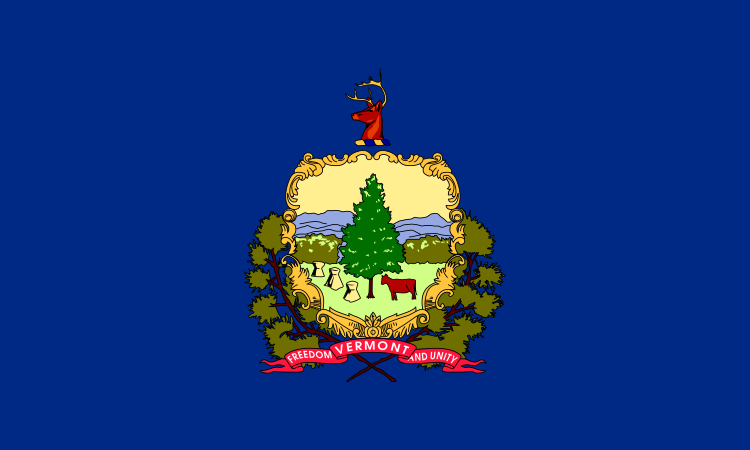 | Vermont | D+17 |
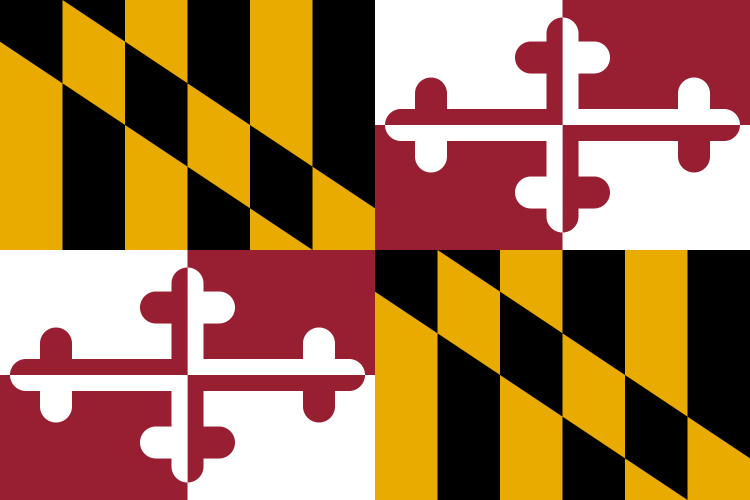 | Maryland | D+15 |
 | Massachusetts | D+14 |
 | Hawaii | D+13 |
 | California | D+12 |
 | Washington | D+10 |
 | Connecticut | D+8 |
 | Delaware | D+8 |
 | New York | D+8 |
 | Oregon | D+8 |
 | Rhode Island | D+8 |
 | Colorado | D+6 |
 | Illinois | D+6 |
 | Maine | D+4 |
 | New Jersey | D+4 |
 | New Mexico | D+4 |
 | Minnesota | D+3 |
 | Virginia | D+3 |
 | New Hampshire | D+2 |
Key Findings
What Is a Blue State?
A blue state is a US state where voters predominantly support the Democratic Party in elections. The term also broadly describes states perceived to hold more liberal or progressive political views.
The red and blue color scheme became standard during the 2000 presidential election when journalist Tim Russert used the terms on televised coverage. Before that, Democrats were associated with red and Republicans with blue.
How Many Blue States Are There?
The number of blue states varies depending on classification method, but states with a Cook Partisan Voting Index (PVI) of D+1 or higher are generally considered blue states.
Some states shift between blue and red across election cycles, which is why they are often classified as swing states or battleground states rather than firmly blue or red.
Bluest State in the US
Washington is the bluest state in the US with a partisan lean of D+10. The three bluest states are Vermont (D+17), Virginia (D+3), and Washington (D+10).
Partisan lean reflects long-term voting patterns and is measured by the Cook Partisan Voting Index, not population size or any single demographic factor.
Is Democrat Red or Blue?
Democrats are represented by the color blue and Republicans by the color red in US political maps and media coverage.
This color association became the national standard after the 2000 presidential election, though there is no official rule assigning colors to either party.