District of Columbia's minimum wage of $17.95 in 2026 is among the highest in the United States, and it is significantly higher than than the base federal minimum wage of $7.25 still used in 20 states.
 Federal
 District of Columbia
Assuming a standard 40-hour work week, the weekly minimum wage in District of Columbia is $718. For full-time employees working 52 weeks per year, the annual minimum wage in District of Columbia is $37.3K.
Based on $17.95/hr minimum
Based on $17.95/hr minimum
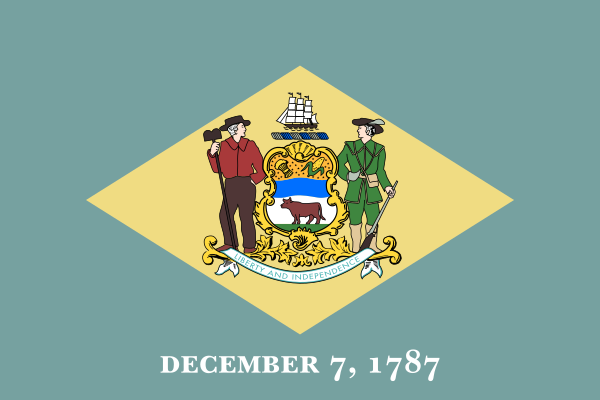
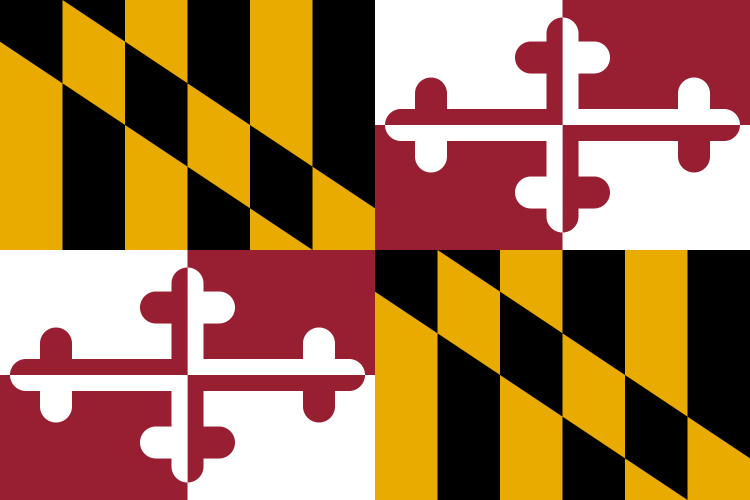
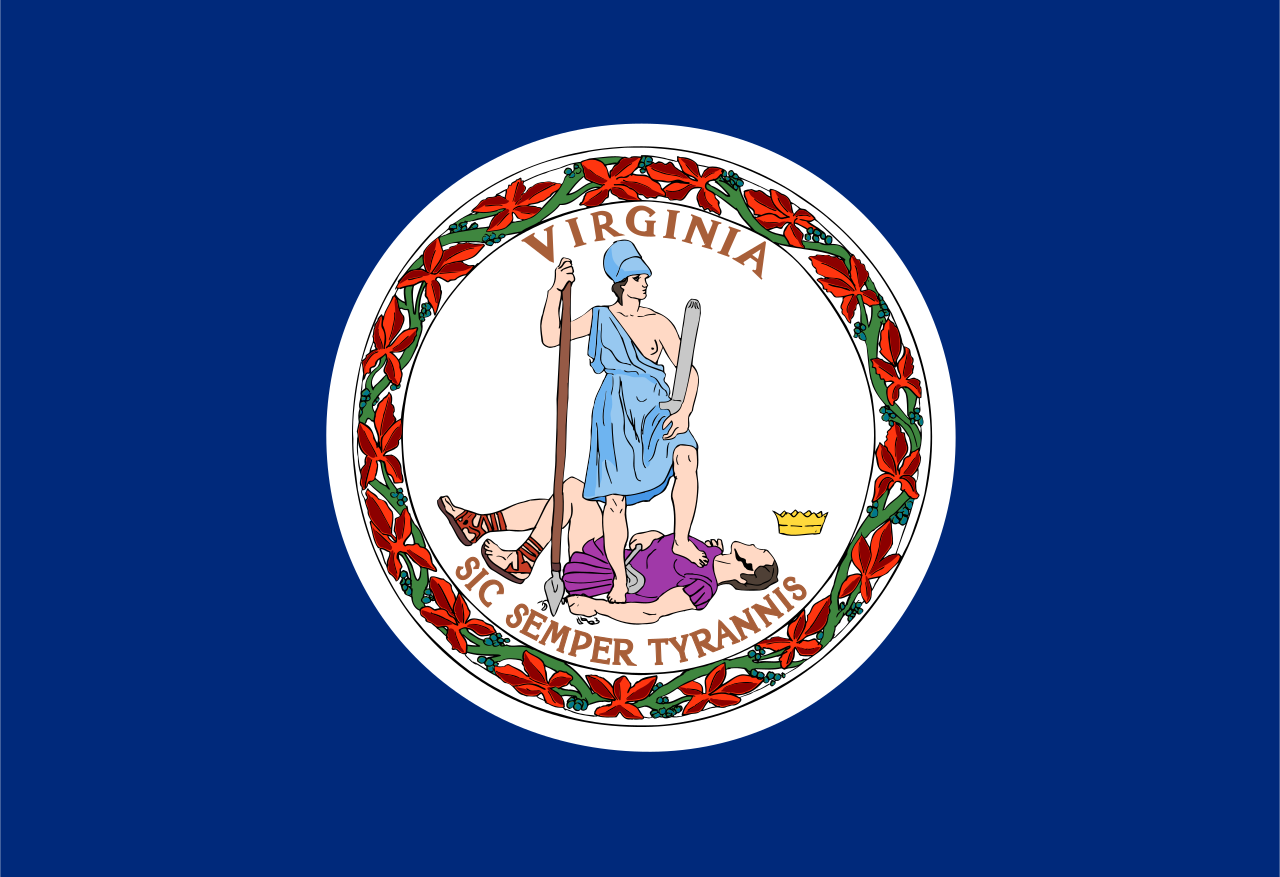
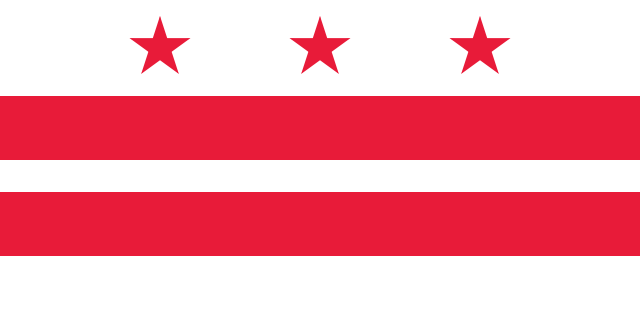
The minimum wage rate of District of Columbia and its neighboring states ranges from $12.77 to $17.95, with an average of $15.18. District of Columbia, at $17.95, has the highest hourly minimum wage within this group of states. Delaware ($15), Maryland ($15), and Virginia ($12.77) have lower hourly rates than District of Columbia.
 District of Columbia
While the general minimum wage is $17.95 per hour in District of Columbia, there are several exceptions where workers may legally receive less than this amount:
An employee that works in the management of the enterprise, or of a recognized department or subdivision and regularly directs the work of at least two full-time employees, is exempt from state overtime legislation.
An employee responsible office or nonmanual work - "white collar work" - directly related to management policies or general business operations or responsible work that is directly related to academic instructions or training carried on in the administration of a school system or educational establishment is exempt from overtime legislation.
An employee whose work requires knowledge of an advanced type in a field of science or learning, usually obtained by a prolonged course of specialized instruction and study and whose work is original and creative in character in a recognized field of artistic endeavor is exempt from overtime legislation.
Employees who regularly work away from their employer and work no more than 20 percent of their time in a workweek performing nonexempt work are exempt from overtime legislation.
Volunteers who work without expectation of payment or any gain, directly or indirectly, or who volunteer to engage in the activities of an educational, charitable, religious, or nonprofit organization are exempt from overtime legislation.
Members elected or appointed to office within the discipline of any religious organization and engaged in religious functions are exempt from state overtime legislation.
Anyone employed as a casual babysitter, in or about the residence of the employer, is exempt from overtime legislation.
Individuals who deliver newspapers to customers’ homes are exempt from overtime requirements.
Workers with disabilities who work for an employer who has received a certificate from the United States Department of Labor that authorizes the payment of less than minimum wage are exempt from the District’s minimum wage legislation.
A security officer working in an office building in the District of Columbia is exempt from the minimum wage legislation.
Individuals under the age of 18 years old are covered by the federal minimum wage of $7.25 rather than the DC minimum wage.
Students employed by institutions of higher education are covered by the federal minimum wage of $7.25 rather than the DC minimum wage.
District of Columbia's cost of living index for 2025 is 138.8, which places it as the 4th most expensive state to live in the United States.
 National
100
District of Columbia138.8
Assuming a standard 40-hour work week, the real wage in District of Columbia, adjusted for the state’s cost of living index of 138.8, is approximately $12.93 per hour. This means that while the nominal minimum wage is $17.95 per hour, the purchasing power of those earnings is lower due to District of Columbia's higher cost of living expenses. For full-time employees, the real weekly earnings amount to roughly $517.29, translating to an annual purchasing power of $26,899.14 when working 52 weeks per year.
Adjusted
Adjusted
Adjusted
According to the most recent data, the median household income in the United States has seen a significant increase in 2023.
The District of Columbia establishes its own minimum wage, which is higher than the federal minimum wage and is adjusted annually based on the Consumer Price Index as provided under District law. The minimum wage is updated each year to reflect changes in inflation as determined by the District’s official adjustment mechanism.