Nevada's minimum wage of $12 in 2026 is about average in the United States, and it is significantly higher than than the base federal minimum wage of $7.25 still used in 20 states.
 Federal
 Nevada
Assuming a standard 40-hour work week, the weekly minimum wage in Nevada is $480. For full-time employees working 52 weeks per year, the annual minimum wage in Nevada is $25K.
Based on $12/hr minimum
Based on $12/hr minimum
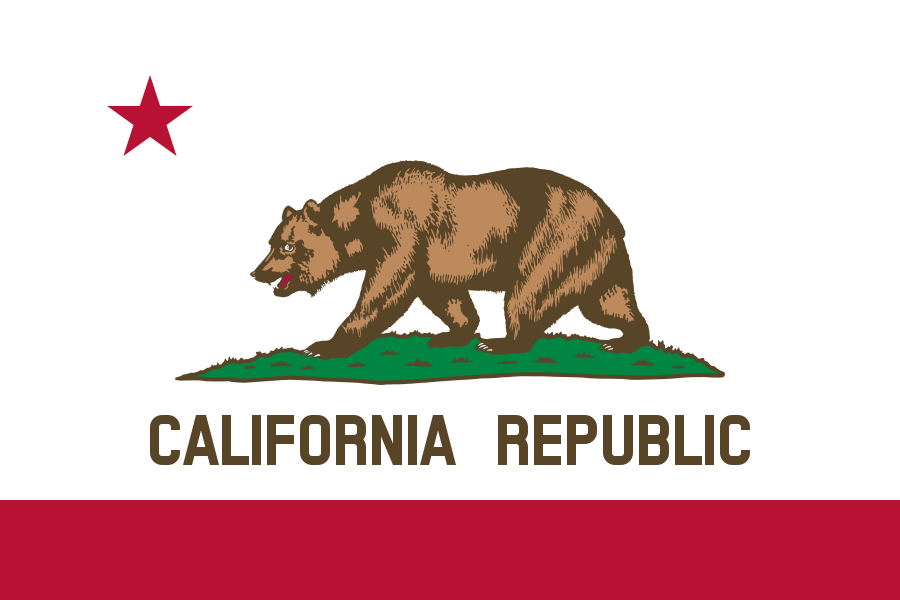
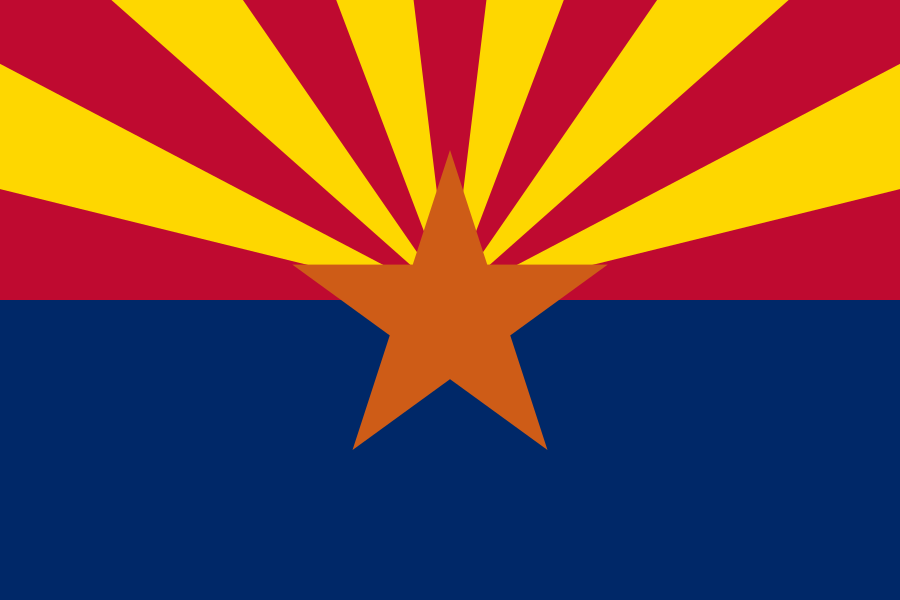
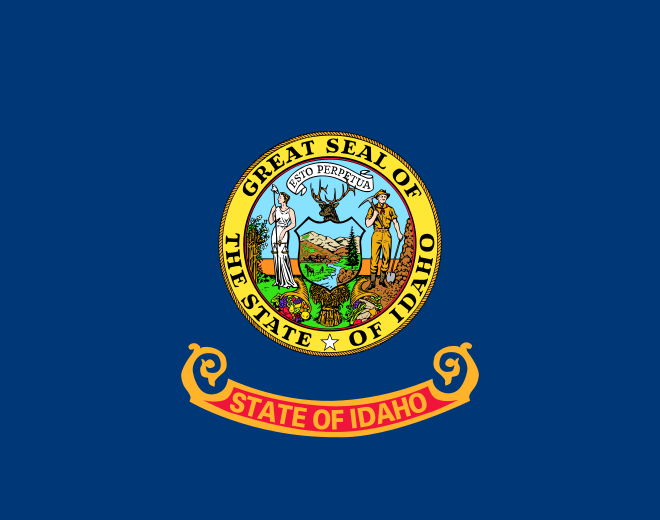
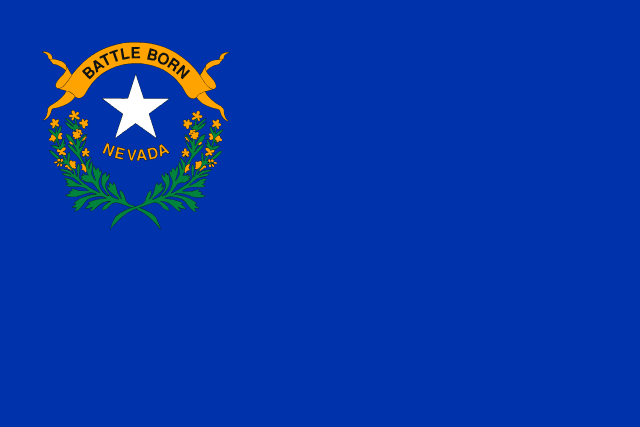
The minimum wage rate of Nevada and its neighboring states ranges from $7.25 to $16.90, with an average of $11.71. Nevada, at $12, has an above average hourly minimum wage within this group of states. California ($16.90) and Arizona ($15.15) both have higher hourly rates than Nevada. Idaho ($7.25) and Utah ($7.25) have lower hourly rates than Nevada.
 Nevada
While the general minimum wage is $12 per hour in Nevada, there are several exceptions where workers may legally receive less than this amount:
Executive employees are defined as those that manage the enterprise/department, supervise two or more employees, and have hiring/firing authority. They are exempt from state minimum wage legislation.
These are defined as employees who perform non-manual work related to business operations with independent judgment on significant matters, and are exempt from state minimum wage legislation.
These workers are split into two categories - learned employees, whose work requires advanced knowledge in a field of science or learning (such as law, medicine, etc.), and creative employees, whose work requires invention, imagination, or originality in artistic or creative fields. Both groups are exempt from minimum wage legislation.
People employed as systems analysts, programmers, or software engineers with specific IT-related duties (excludes manufacturing/repair) are exempt from state minimum wage legislation.
Employees whose job is to primarily make sales or secure contracts, customarily working outside the employer’s business location are exempt from state minimum wage legislation.
Nevada's cost of living index for 2025 is 100.2, which places it as the 23rd most expensive state to live in the United States.
 National
100
Nevada100.2
Assuming a standard 40-hour work week, the real wage in Nevada, adjusted for the state’s cost of living index of 100.2, is approximately $11.98 per hour. This means that while the nominal minimum wage is $12 per hour, the purchasing power of those earnings is lower due to Nevada's higher cost of living expenses. For full-time employees, the real weekly earnings amount to roughly $479.04, translating to an annual purchasing power of $24,910.18 when working 52 weeks per year.
Adjusted
Adjusted
Adjusted
94K
96K
98K
100K
102K
104K
106K
108K
110K
112K
114K
116K
118K
120K
According to the most recent data, the median household income in the United States has seen a significant increase in 2023.
Nevada’s minimum wage is set under a two-tier system that historically allowed lower rates for employers offering qualifying health benefits. Following recent voter-approved changes, the state is transitioning toward a single uniform minimum wage, eliminating the two-tier structure. The rate is adjusted periodically based on statutory requirements rather than automatic annual inflation indexing tied directly to the Consumer Price Index.